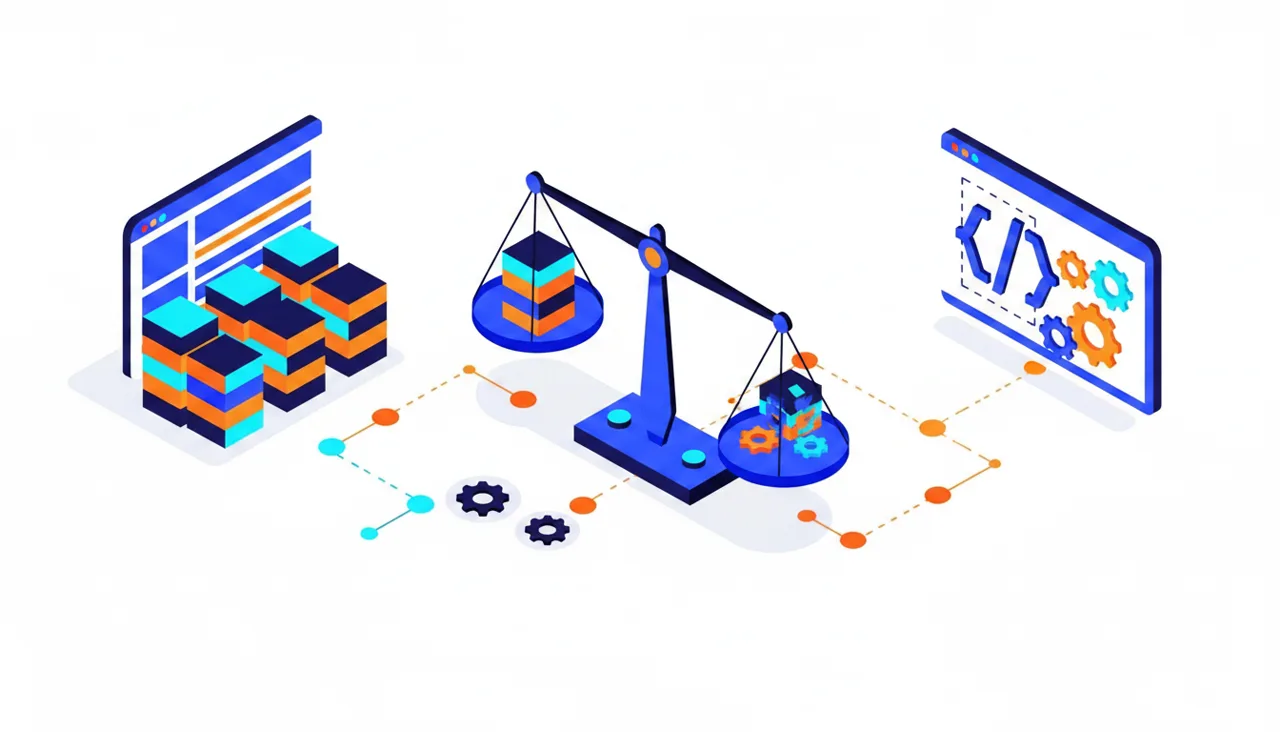
The short answer: If your need is a standard corporate website or a typical e-commerce operation, ready-made solutions (such as WordPress, Wix, ikas, or Ticimax) are a faster and more economical starting point for most businesses. On the other hand, if you have a unique workflow, deep integration requirements, a serious scaling ambition, or a plan to turn software into a competitive advantage, custom software is the right choice. So the real question isn't "which is better?" — it's "which one fits my business?" In this guide we'll walk through the scenarios where each path excels, the total cost of ownership, and a clear decision matrix, step by step.
This is one of the most commonly delayed and most commonly misjudged decisions in web projects. Among our clients, we see two extreme scenarios most often: businesses that tie up money in a months-long custom development project for standard needs on one side, and businesses that try to squeeze their unique processes into an off-the-shelf template and end up accumulating a new plugin, module, or "workaround" every month on the other. Both lead to the same place: wasted time, wasted budget, and lost motivation. The right decision, however, requires looking at your business model before looking at technology.
What Does the Decision Actually Depend On?
The answer to this question isn't in the technology — it's in the structure of your business. Two businesses with the same budget can find that a ready-made solution is the perfect decision for one but turns into a cost line that needs to be torn out and rebuilt two years later for the other. A sound decision requires looking at four dimensions together:
- Complexity of needs: Is what your site needs to do standard work that any business in your industry does (introduction, content, classic product sales), or are there processes unique to you (dealer pricing, production tracking, custom calculations, multi-step approval workflows)?
- Budget — but not the sticker price, the total cost: The setup fee alone is misleading. A comparison can't be made without factoring in monthly subscriptions, sales commissions, plugin and module rental fees, development hours, and the eventual cost of switching platforms (exit cost).
- Time: Do you need to be live in two weeks, or can you wait out a three-to-six-month development cycle? Speed to market is sometimes more valuable than perfection.
- Ownership and dependency: Whose hands hold the code, the data, the customer relationship? What happens if the platform changes its pricing policy, removes a feature, or you grow and hit the platform's limits?
In the rest of this article we'll unpack each of these four dimensions; at the end we'll bring them all together into a single decision matrix. By the time you finish reading, you'll have in your hands not a "I think" — but a concrete framework you can apply to your own business.
What Do Ready-Made Solutions Actually Do Well?
When we say "ready-made solution," we're not talking about a single thing. In practice there are three different layers, and each excels in a different place.
1) Website builders (Wix, Squarespace, and similar)
Platforms where you can go live in a few days with a drag-and-drop editor. A perfectly sensible starting point for solo operators, a newly opened café or workshop, portfolio sites, and businesses at the "let's get visible first" stage. No technical knowledge required; hosting, security, and update headaches stay on the platform's side. In exchange, design and functional flexibility is limited; as your business grows and your requirements diversify, you'll start bumping into the platform's walls.
2) WordPress and theme ecosystem
Still one of the most mature and economical foundations for content-focused corporate sites and blogs. Through the theme and plugin ecosystem, most standard needs — contact forms, multi-language support, SEO infrastructure, basic membership — are solved with ready-made modules and, when set up correctly, run trouble-free for years. The flip side: as the plugin count grows, so do the maintenance burden, security risk, and performance issues. Uncontrolled plugin accumulation is one of the most common causes of declining Core Web Vitals scores and therefore SEO performance. WordPress is not a "set it and forget it" system — it's a "set it and maintain it regularly" system.
3) Ready-made e-commerce platforms (ikas, İdeasoft, Ticimax, Shopify)
For a business starting out in e-commerce in Turkey, these platforms come with a significant advantage: virtual POS (payment gateway) connections for iyzico and PayTR, shipping carrier and volumetric weight pricing integrations, Trendyol and Hepsiburada marketplace connections, and e-invoice and e-archive integrations are largely pre-built. Infrastructure that would take months to build from scratch and require significant budget is available to use from day one in exchange for a monthly subscription. Which platform suits you is itself a separate decision; we examined this in detail in our ikas vs. Shopify comparison.
In summary, ready-made solutions excel in these scenarios:
- Your need is industry-standard: an introduction site, a blog, classic B2C e-commerce.
- You want to launch quickly and test the market with low risk.
- Your initial budget is limited; your cash flow suits monthly payments rather than a one-time investment.
- You have no technical resources in-house and won't in the near term.
Let's be honest: telling a business with this profile to "definitely get custom software built" is like selling a truck to someone who doesn't need one. A ready-made solution here is not just "good enough" — it's often the more correct decision.
In Which Scenarios Is Custom Software Necessary?
Custom software means your site or business system is developed specifically for you on a modern technology foundation. It's not an expensive luxury; it becomes the most economical path when certain conditions arise. The main situations where it needs to come into play:
- Unique workflow: When your processes don't fit standard templates. Dealer-specific price lists and payment terms, production-order tracking, products priced by measurement, multi-branch appointment and inventory management, internal approval chains... Trying to "manage these with plugins" on a ready-made platform typically produces a patch kit that grows bigger every month.
- Deep integration needs: When you need two-way, real-time data flow with your ERP or accounting software, warehouse-inventory system, e-invoice provider, or shipping and CRM tools. There is a world of difference between two systems that "talk to each other occasionally" and ones that work in true real-time synchronization.
- Scale and performance: High traffic, tens of thousands of products, flash campaign loads, large numbers of simultaneous users. Ready-made platforms are comfortable up to a certain scale; beyond that threshold you'll run into either expensive enterprise plans or structural bottlenecks.
- Competitive advantage: When the software itself differentiates your business — a customer portal competitors don't offer, a smart pricing engine, a loyalty system tailored to you. You can't stand out from the crowd using the same tools everyone else is renting; what creates differentiation can't be rented.
- Ownership, data, and KVKK: Owning the code and data; being able to give a clear answer to questions about where and how customer data is held when it comes to KVKK; not being at the mercy of platform price and policy changes.
Let's give a concrete example: imagine a manufacturer in Anatolia working with 150–200 dealers. Each dealer has their own price list, payment terms, and credit risk limit; order approval goes through a sales representative. This structure can't be fitted into a classic B2C e-commerce template — companies that try generally get lost between Excel, WhatsApp, and phone traffic. The right answer here is a custom B2B portal where dealers see their own terms. Projects in this class are among the most common work we do on our custom software and website side.
Total Cost of Ownership: Why the Sticker Price Misleads
The classic mistake when comparing the two options is placing the ready-made solution's monthly fee next to the custom software's project cost. This is like comparing rent to a home purchase price; they measure different things. The right comparison is to look at the total cost of ownership over a window of at least 3 years:
| Cost item | Ready-made solution | Custom software |
|---|---|---|
| Initial / setup | Low: theme, setup, basic configuration | High: analysis, design, development, testing |
| Monthly / annual fixed cost | Subscription + paid plugins and modules + sales commission on some plans | Server and hosting + maintenance agreement (relatively low and predictable) |
| Development / customization | Possible within platform limits; beyond the limit is expensive or impossible | Scales in any direction you want; can be grown module by module |
| Dependency and exit cost | High: data migration, risk of SEO loss, starting fresh | Low: code and data are yours; even if the team changes, the asset stays with you |
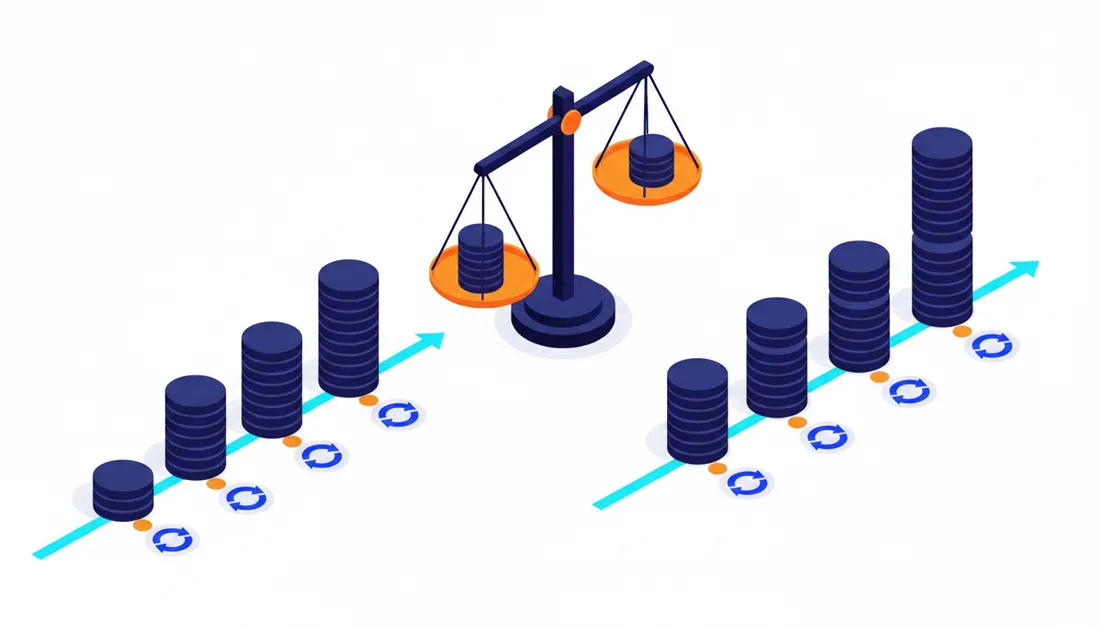
Let's speak honestly with broad ranges for the 2026 Turkish market — exact figures aren't possible because scope is the determining factor. Website builders range from a few hundred to a few thousand TL per month. A professionally built WordPress corporate site, depending on content depth and page count, typically requires a five-figure setup budget. On ready-made e-commerce platforms, adding a professional design-and-setup cost on top of the monthly plan fee generally brings the first-year total to the mid five-figure range; and on some plans the commission that grows with revenue shouldn't be forgotten. For custom software, single-module projects can start below six figures, while comprehensive platform projects can reach seven figures. We broke down what variables shape this calculation in our custom software cost guide; for a detailed cost breakdown on the e-commerce side, see our article How Much Does It Cost to Open an E-Commerce Site. If you want to get a rough framework for your own scope, our free analysis wizard — which takes just a few minutes to fill in — can help you clarify your needs.
The critical point often missed here: a ready-made solution's cost tends to increase over time, while custom software's cost tends to amortize over time. As your revenue and needs grow, commissions, plan upgrades, and module fees accumulate on the ready-made platform; with custom software, the large investment is upfront, and what follows is relatively stable. Which curve is advantageous for you depends precisely on where you currently stand.
Decision Matrix: Combine Need, Budget, and Time in One Table
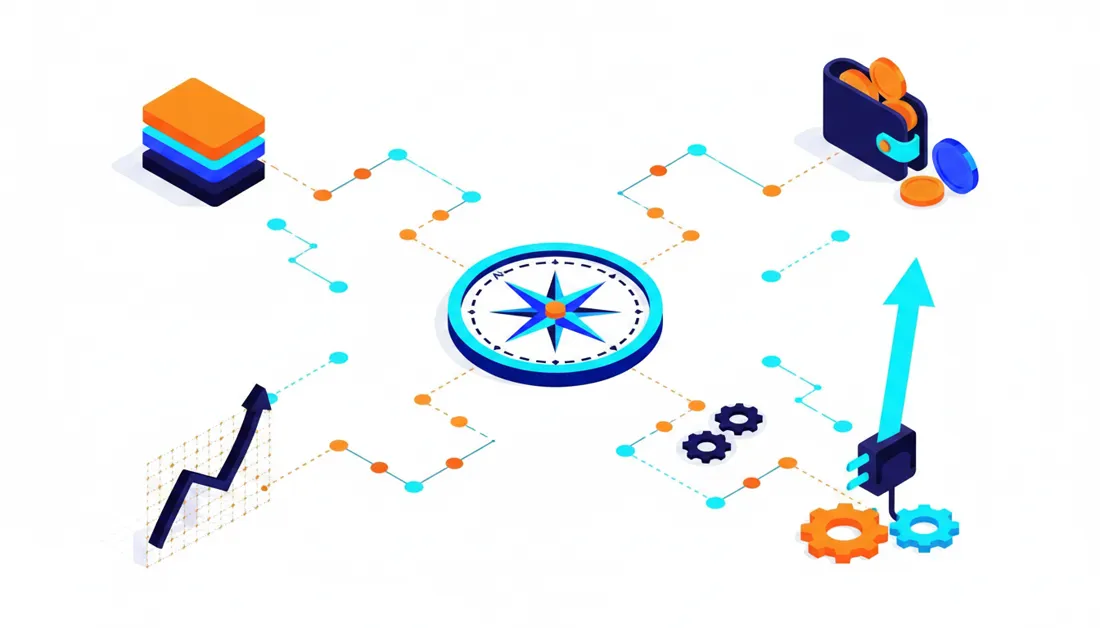
Let's bring the four dimensions together in one table. Find the row closest to your situation; the recommended path is the one that has typically produced the least regret among the businesses we've worked with:
| Your situation | Recommended path | Why |
|---|---|---|
| Standard introduction site, tight budget, fast launch | Website builder or pre-built themed WordPress | Need is standard; loss of flexibility doesn't hurt yet |
| Content-heavy corporate site + blog + SEO goals | Professionally configured WordPress or modern ready-made platform | Content management is mature; budget goes toward content and SEO |
| Classic B2C e-commerce, standard processes | Ready-made e-commerce platform (ikas, İdeasoft, etc.) | POS, shipping, marketplace, e-invoice are ready; you gain speed |
| Standard e-commerce + 1–2 unique needs | Ready-made platform + custom module (hybrid) | The standard part comes from ready-made; the differentiating part from custom |
| Unique workflow, deep integration, B2B/portal, scaling ambition | Custom software | Squeezing something that doesn't fit a template into a template costs more in the end |
If the table isn't enough, ask yourself these five questions:
- Do eight out of ten businesses in my industry do what I'm trying to do? If yes, a strong signal in favor of a ready-made solution; no need to reinvent the wheel for standard work.
- How many times do I use the sentence "but in our case it's different" when explaining my processes? More than three times, and custom development or a hybrid model should come to the table.
- Is what I expect from this system in three years very different from what I expect today? If the growth plan is clear, the path that looks cheap today may feel cramped tomorrow.
- Does system slowdown or downtime directly impact my daily revenue? If yes, ownership, control, and performance become critically important.
- Which suits my cash flow better: monthly payments or a one-time investment? Financial reality is a legitimate part of the decision too.
The Third Path: Ready-Made Platform + Custom Module (Hybrid Model)
For most businesses, the smartest answer is not one of the two extremes but the right mix of both. In the hybrid model, the standard part of the work is carried by the ready-made platform, and the differentiating part is custom-built. The combinations we set up most often in practice:
- Ready-made e-commerce platform + custom B2B dealer portal: Retail sales run on a platform like ikas, while dealers place orders through a custom portal where they see their own pricing and payment terms.
- WordPress corporate site + custom calculation/quote tool: The site's content side is managed by the ready-made system; the engine that generates prices by square footage, dimension, or configuration is custom-built.
- Ready-made platform + ERP/e-invoice bridge: A custom integration layer providing two-way synchronization between the platform and your accounting-inventory system.
- Ready-made site + custom customer panel: The public-facing side runs on a ready-made solution, while a custom panel operates alongside it for members to access their order history, files, or appointments.
The strength of the hybrid model is solving a unique need without incurring the cost of "building everything from scratch." The risky part is integration quality: if the platform's API limits, webhook reliability, and data synchronization strategy aren't designed at the start of the project, the hybrid system can turn into a structure that combines the worst of two separate systems. That's why in a hybrid project, the technical discovery phase is just as important as the development itself.
Common Misconceptions: The Myths on Both Sides
"Custom software is always expensive"
It isn't. What's expensive is custom software that starts with an undefined scope. Projects that start with a single module, begin from the most critical need, and grow incrementally both progress within a manageable budget and — especially if the ready-made side's commissions and module fees are accumulating — can turn out more economical in total over a three-year window.
"Ready-made solutions are always cheap"
The sticker price is cheap; the total cost isn't always. When paid plugins, theme customization fees, workarounds generated every time you hit the platform's limits, and commissions that grow with revenue are added to the monthly subscription, the figure that emerges at the end of three years surprises most business owners. Starting cheaply and keeping costs cheap are not the same thing.
"If we start with a ready-made solution, all the work will be wasted"
It won't. Your brand, your content, your SEO equity, your customer and order data are all portable assets. In a planned migration where URL structures and redirects are set up correctly, SEO loss can largely be prevented as well. Starting with a ready-made solution, validating the business, then moving to custom software is a far healthier sequence than making a large upfront investment only to find that the market is small.
"Custom software is finished when it's delivered"
It isn't. Security updates, server maintenance, browser and integration changes, new requirements — custom software also needs an annual maintenance budget. Custom software left unmaintained deteriorates over time, just like an unmaintained WordPress installation. When receiving proposals, always request the maintenance and support terms in writing.
"You can't achieve a professional look and SEO with a ready-made solution"
You can. A ready-made platform that is set up correctly, with properly managed speed and technical SEO, competes perfectly well in search results. The difference is not in the platform but in the execution: a carelessly built custom software and a carefully built ready-made site both exist, and search rankings reflect this.
Step-by-Step Decision Roadmap
If you've reached the decision stage, apply these five steps in order:
- Take an inventory of your needs: List everything the system needs to do in a single list; next to each item write "standard" or "unique to us." This single list will also make every conversation with agencies you consult clearer.
- Dig deeper into the "unique to us" items: For each unique need, answer the question "have we tried solving this with a ready-made tool, and what was the result?" The answers are the raw data for the "hybrid or fully custom?" question.
- Calculate the three-year total cost: For each option, add up setup + 36 months of fixed costs + projected development + estimated exit cost. Most decisions clarify themselves in this table.
- Ask about the exit scenario upfront: "If I want to leave this platform or software in three years, how do I migrate my data and SEO equity?" Don't sign any proposal that can't answer this question.
- Start small, validate fast: Whatever path you choose, focus the first version on the core need. If you're new to e-commerce, the sequence in our e-commerce site opening guide offers a good skeleton for planning your first steps.
One final reminder: this decision is not an identity statement — it's a tool selection. Starting with a ready-made solution today and moving to custom software in two years, or adding ready-made tools alongside a custom core, are both legitimate and common paths. What matters is that you make the decision based on need, total cost, time, and ownership dimensions — not based on price tags or habit.
Wherever you are in this process, you don't have to make this decision alone. At Alis Dijital, we start by listening to your workflow; if your need can be solved with a ready-made platform, we say so plainly — and if custom development is required, we define the scope module by module and move forward with a predictable plan. You can take a look at our Custom Software and Website service to discuss your project; a properly structured system becomes your quietest but hardest-working team member in the years ahead.

