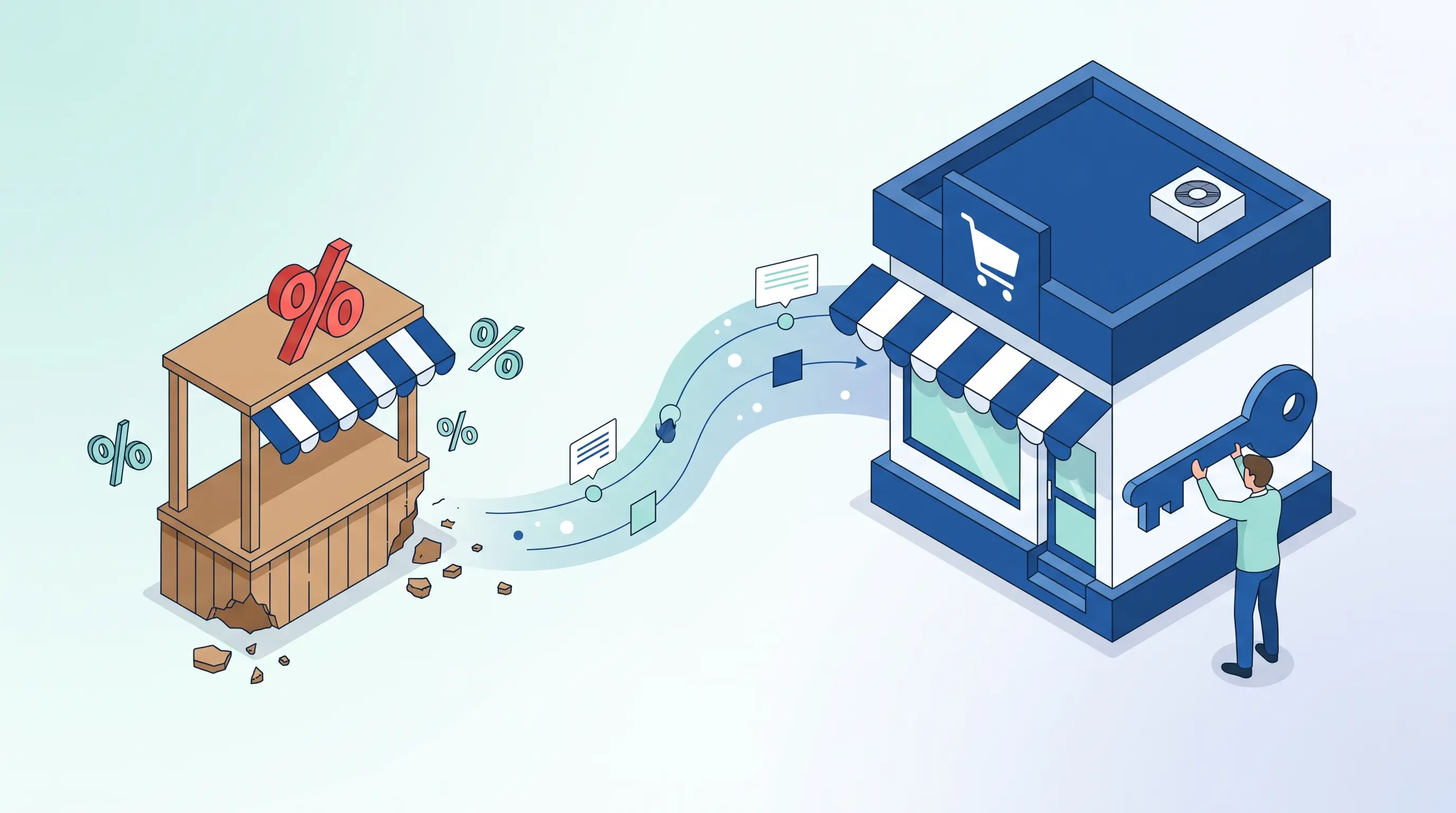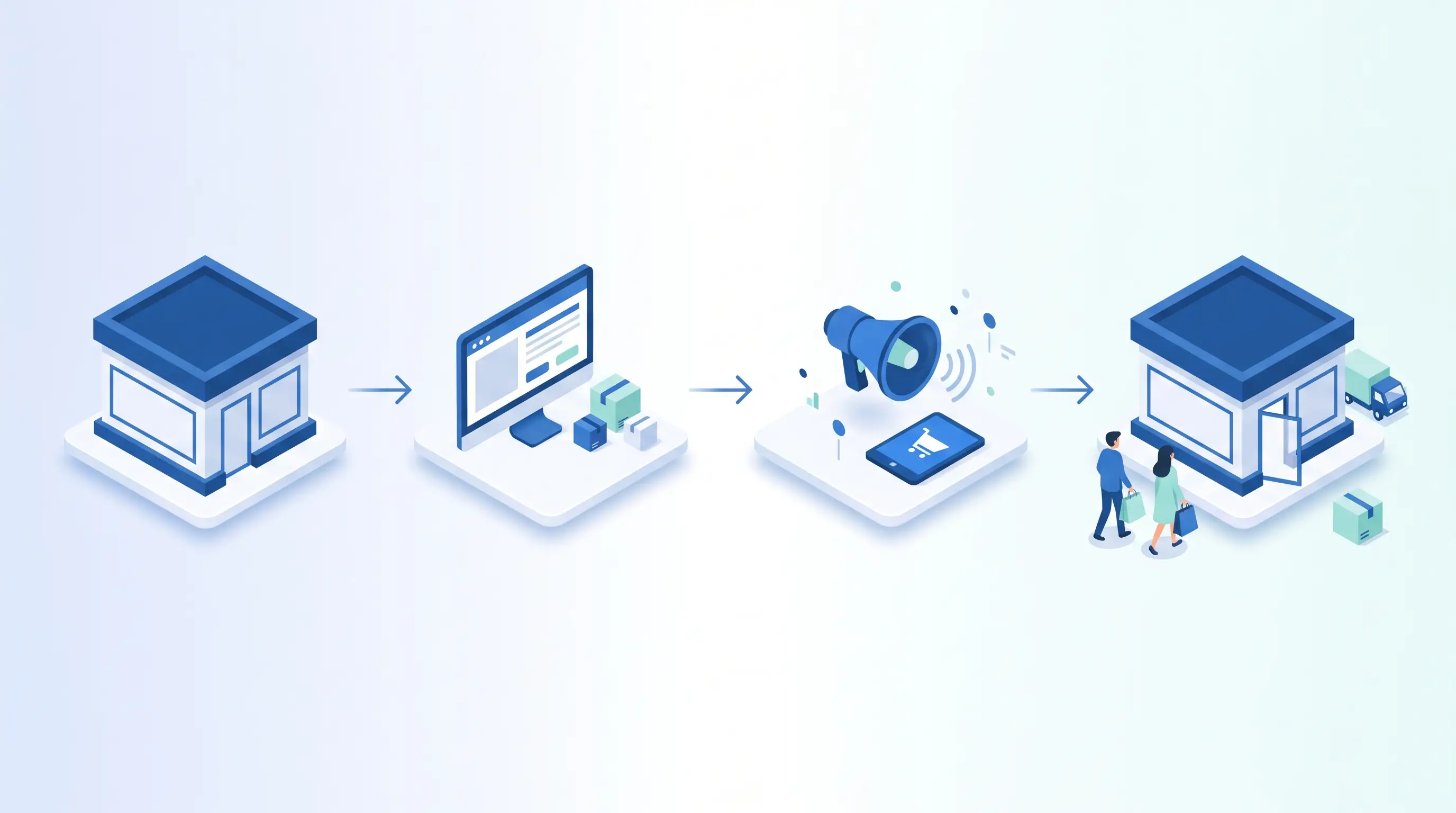
The mistakes made when starting an e-commerce business are surprisingly common: choosing a product without market or competitor research, locking money into a platform that doesn't fit your business model, entering advertising without fully calculating costs or knowing your break-even point, becoming dependent on a single marketplace, neglecting product page quality and visuals, failing to set up measurement before launch, and placing all growth bets on a single channel. When you hear the story of a failed e-commerce venture, you'll almost always find at least three of these seven mistakes combined. The good news: they are all predictable and preventable with the right launch plan.
In this guide we examine each of the seven mistakes through three questions: Why does this mistake happen so often? What does it actually cost you? And what's the right way to do it? Drawing from real scenarios we encounter most frequently with our clients, we'll map out an up-to-date, actionable roadmap suited to Turkey's 2026 e-commerce landscape.
Why Are These Mistakes So Common?
Because most "how to start an e-commerce" content covers only the visible parts of the business: launching a site, uploading products, starting ads. The invisible parts — unit economics, measurement infrastructure, channel strategy — fade behind the excitement of making the first sale. Success stories are always told from the end; no one shares which product ideas were scrapped before launch or what analyses were done beforehand. Naturally, you copy what's visible.
The second reason is a sense of urgency. The pressure of "I need to start selling as soon as possible" makes even two weeks of preparation feel like an unnecessary delay. Yet as you'll see in the seven points below, every skipped preparation step comes back later as a far more expensive fix. Let's go through them one by one.
Mistake 1: Choosing a Product Without Market and Competitor Research
Why does it happen? Because product ideas usually come from emotion, not data. You meet a supplier, you see a product abroad and assume "it doesn't exist in Turkey," or people around you say "you'd definitely sell this." Enthusiasm replaces research. Yet what you personally like and what the market actually demands are entirely different things.
What does it cost? This is the most expensive mistake because everything else is built on top of the product choice. With a product that has no demand, or one buried in a price war, your inventory capital sits on a shelf, your ad budget burns trying to "create demand" from scratch, and when you drop the price there's no margin left. The pattern we see most often with our clients: two weeks of analysis skipped at the product-selection stage turns into months of "why isn't it selling?" in year one.
What's the right approach?
Validate demand before you fall in love with the product. You don't need a big budget — just a few systematic steps:
- Measure search demand: Use Google's Keyword Planner and Trends to look at search volume and seasonality for the product. A product no one searches for is one where you'll have to create demand through advertising — which is expensive.
- Read marketplace signals: On Trendyol and Hepsiburada, how many sellers carry the same product, how do review counts look, where does the price band sit? Categories with high demand but low seller quality are opportunities; products where dozens of sellers have raced to the bottom price are usually closed to you.
- Estimate your competitor's cost structure: If you subtract commission, shipping, and estimated product cost from your competitor's selling price and nothing's left, there won't be anything left for you either in that market.
- Test small: Before committing to large inventory, get a read on real demand with a small batch or a pre-order page. Sales data is more reliable than any forecast.
We walk through how to systematize these steps in our market analysis guide; we strongly recommend reading it before choosing a product.
Mistake 2: Choosing an E-Commerce Platform That Doesn't Fit Your Business
Why does it happen? Platform decisions are usually made at one of two extremes: either "go with the cheapest" and pick a package that can't handle the business, or dive into tens of thousands of TL in custom software on day one. Both stem from the same root cause: deciding without first writing out a requirements list. A friend's recommendation, a promotional discount, or the perception that "everyone uses it" overrides the actual needs of your business model.
What does it cost? The real bill from the wrong platform arrives on migration day. Migrating a site means changing the URL structure, putting SEO equity at risk, rebuilding integrations from scratch, and weeks of operational disruption. On top of that, missing integrations — shipping, e-invoicing, marketplace sync, virtual POS (payment gateway) — mean doing everything manually each day; once you reach hundreds of orders a month, this turns into a hidden staffing cost.
What's the right approach?
Write your requirements list first, then choose a platform. For a new business in Turkey in 2026, here are the key areas to check:
- Payments: Does it work smoothly with providers like iyzico and PayTR, or with a bank's virtual POS? Can installment options be managed easily?
- Operations: Are shipping carrier and e-invoicing/e-archiving integrations built in, or do they require extra modules at extra cost?
- Marketplace sync: Can it sync inventory and prices with Trendyol and Hepsiburada?
- SEO and speed: Do you control URLs, meta tags, and redirects? Do pages load fast on mobile?
- Total cost of ownership: What does the annual total of monthly plan + transaction commission + theme and app fees add up to?
We examined the differences between SaaS platforms in detail in our ikas vs. Shopify? comparison; for the full setup process, check out our how to launch an e-commerce site guide. The general rule: a scalable ready-made platform is more than enough for most businesses in year one; custom software should only come into the picture when your business model genuinely cannot fit into an off-the-shelf solution.
Mistake 3: Incomplete Cost Calculation — Running Ads Without Knowing Your Break-Even Point
Why does it happen? Because most new entrepreneurs think "cost" means only the product purchase price and ad spend. Commissions, shipping, returns, packaging, and taxes are considered "small items." Yet when these small items add up, they consume a significant portion of the selling price.
What does it cost? A business that runs ads without knowing its break-even point is, in the truest sense, driving in the dark. Revenue grows but cash doesn't accumulate; in some accounts we've taken over, the business had unknowingly been losing money on every sale for months. The phrase "we're selling but can't make money" almost always traces back to this mistake.
In Turkey, items typically overlooked include:
| Cost item | Commonly missed point | Impact on profit |
|---|---|---|
| Shipping | Price varies by desi (volumetric weight); even a negotiated rate can mislead on bulky products | Silently erodes margin |
| Commissions | Marketplace commission and virtual POS/installment commission are deducted separately | Double deduction per sale |
| Returns | Round-trip shipping + repackaging + product that can no longer be sold | Profit-killer in high-return categories |
| Tax and accounting | VAT, e-invoicing/e-archiving, and accountant fees | Part of what you think you earned isn't yours |
| Packaging and waste | Boxes, fill material, labels, damaged goods | Small per unit, large in aggregate |
What's the right approach?
Before spending a single kuruş on advertising, calculate your unit economics per product: subtract all variable costs from the selling price, find the remaining contribution margin, and calculate your break-even ROAS (selling price ÷ contribution margin). This single-line calculation instantly tells you which ad result is profit and which is loss.
Let's walk through a concrete example (figures are illustrative): say you sell a product for 600 TL, your cost is 250 TL, shipping is 60 TL, and payment commission plus packaging is 50 TL. Your contribution margin is 240 TL; your break-even ROAS works out to 600 ÷ 240 = 2.5. When your ads drop below a 2.5 ROAS, you're not growing — you're burning. This figure is always the first filter for budget decisions in the accounts we manage.
For the full breakdown of the calculation, see our ROAS guide; to compare commission items, see our virtual POS commission comparison. We compiled realistic ranges for all setup-phase cost items in our e-commerce cost guide, and we covered the full profit-over-revenue mindset in depth in our profitability guide.
Mistake 4: Tying Your Entire Future to a Single Marketplace
Why does it happen? Because a marketplace is the easiest starting point: ready-made traffic, ready-made trust, ready-made payment infrastructure. First sales come quickly and the thought "why do I even need my own site?" takes hold. Commissions seem tolerable at first because the cost of the alternative hasn't been calculated yet.
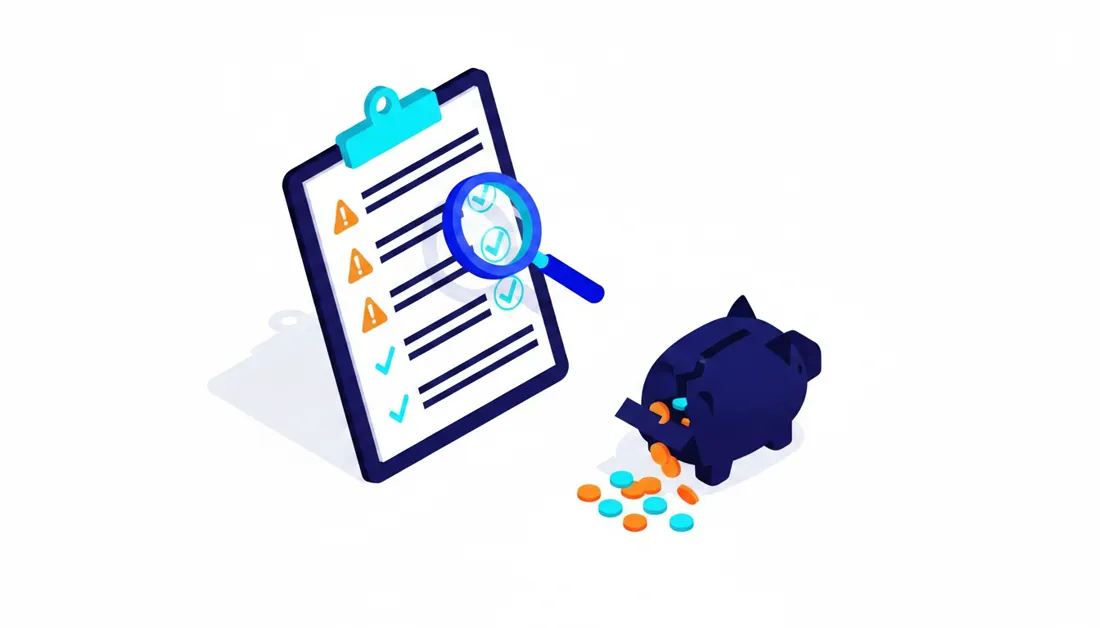
What does it cost? On a marketplace you are a guest, and you don't set the rules. Commission rates and deductions can change, your product competes head-to-head on price with similar listings on the same page, and your account can be suspended by a single complaint or policy update. The most critical loss is the invisible one: the customer belongs to the marketplace, not to you. You can't build an email list, run remarketing, or run a loyalty program. In other words, on every sale you hand over the most valuable asset in any business — the customer relationship — to the marketplace.
What's the right approach?
The answer isn't to reject marketplaces but to position them correctly. The healthy model is hybrid: marketplaces serve as your cash-flow and product-validation channel, while your own site becomes your brand and profitability hub. On your own site the commission burden drops, customer data stays with you, and you can build a real growth engine based on repeat purchases and customer lifetime value (CLV). Even with a simple thank-you card in the package and a small first-order incentive, you can start converting marketplace customers to your own site.
Mistake 5: Neglecting Product Page Quality and Visuals
Why does it happen? Because of the "if the product is good, it sells itself" illusion. Low-resolution images from the supplier get uploaded as-is, two sentences are written in the description, size charts and return policies are skipped. The site is launched simply "to be launched."
What does it cost? Your ad gets clicked but no sale comes — the most expensive scenario: you paid for traffic and lost the conversion. Visitors can't touch the product or see your face in-store; the product page is the only trust signal they have. Weak visuals and vague information turn into a "can I really trust this?" question in the visitor's mind. A low conversion rate means spending more on ads to achieve the same sale — which means your customer acquisition cost is permanently elevated.
What's the right approach?
- Shoot original visuals: Clean white-background product shots + lifestyle/usage images + a short product video are among the fastest conversion levers available.
- Answer questions on the page: Size chart, material, usage information, shipping time, return policy — if the customer has to ask, the page is incomplete.
- Add social proof: Customer reviews and real user photos are the most powerful trust signals for a new site.
- Write for search: Frame titles and descriptions using the language customers actually search; full details in our e-commerce SEO guide.
- Don't neglect speed: Heavy images slow pages down on mobile; the steps in our PageSpeed guide let you maintain image quality without sacrificing speed.
We compiled the measurable tactics for product page optimization across 14 points in our conversion rate optimization (CRO) guide — a list anyone with a live site can act on today.
Mistake 6: Not Setting Up Measurement Before Launch (GA4 and Pixels)
Why does it happen? Measurement feels like "a technical detail" and always gets pushed to later. The site goes live, ads start running; GA4, the Meta pixel, and conversion tracking will be set up "at some point." That "some point" usually comes after the first serious budget loss.
What does it cost? You suffer a two-layer loss. The first is decision loss: you can't tell which channel, which product, or which campaign is driving sales, so you allocate budget by gut feel. The second is algorithm loss: Meta's and Google's ad systems learn from conversion data; if the pixel and server-side conversion API aren't feeding data, your ads can't learn, and you get more expensive results from the same budget. On top of that, every day you go without measurement is irreversible — that data is gone forever.
What's the right approach?
- Before launch, set up GA4 with e-commerce events (product view, add to cart, purchase); find the step-by-step setup in our GA4 guide.
- Add the pixel and server-side conversion tracking (e.g. Meta Conversions API) for every platform you plan to advertise on.
- Verify Google Search Console and submit your sitemap.
- Start UTM tagging discipline on all campaign links from day one.
- Define a single-page monthly report template for yourself: visits, conversion rate, order count, and per-channel above/below break-even status.
These five steps are a few days' work even for a business owner with limited technical knowledge; in return, they give you the ability to base every business decision on data.
Mistake 7: Leaning on a Single Channel — Only Ads or Only Organic
Why does it happen? The first channel that works creates dependency. If sales came through ads, "ads = automatic sales machine" becomes the belief and the budget keeps growing; if you started with organic traffic, "spending on ads is waste" takes hold. Both extremes are the same structural mistake: crossing an ocean in a single-engine plane.
What does it cost? In a business that grows only through ads, profit disappears the moment ad costs rise; the day you turn off the budget, revenue turns off too. In a business leaning only on organic, a single algorithm update or an aggressive competitor can take away a significant portion of traffic within months. The accepted truth in the industry is this: durable e-commerce businesses draw revenue not from a single channel but from a portfolio of channels that feed each other.
What's the right approach?
Build a three-layer channel portfolio and activate the layers in sequence:
- Paid channels: Google and Meta ads for fast, scalable demand. Our Google Ads for e-commerce and Meta Ads guide map out starting strategies.
- Organic channels: SEO and content accumulate over time, reduce ad dependency, and grow branded searches.
- Owned channels: The email and SMS list you collect with GDPR-compliant consent is entirely yours; our email automation guide covers setting up welcome series and cart reminder flows. The first job of this channel is also clear: winning back abandoned carts.
You don't need to tackle all three at once at the start; sequence matters. The order we typically recommend to our clients: measurement and product page quality first (the antidote to Mistakes 5 and 6), then a controlled test on a single paid channel, email consent collection in parallel, and SEO and content investment last. This way, each new channel is financed by the data and revenue of the previous one. If you're having trouble adapting this sequence to your own business, our e-commerce consulting service does exactly this prioritization together with you.
A 10-Point Checklist for a Solid Start

When you reverse the seven mistakes, a clear launch plan emerges. Keep this list with you before launch; if you can't check off each item, it's still too early to open the ad budget:
- The product's search demand and marketplace competition have been validated with data.
- Unit economics per product — contribution margin and break-even ROAS — have been calculated.
- The platform was chosen based on a requirements list: payments, shipping, e-invoicing, marketplace sync, SEO control.
- Company, tax, and e-invoicing matters have been clarified with an accountant.
- Product pages are live with original visuals, size/information tables, and clear return policies.
- GA4, pixels, and conversion tracking were set up before launch and verified with a test order.
- Search Console has been verified and sitemap submitted.
- A single-channel, small-budget, break-even ROAS–targeted ad test plan for the first month is ready.
- An email consent collection mechanism (signup incentive, post-order consent) is active from day one.
- A weekly data review routine is on the calendar: sales, conversion rate, channel performance, return rate.
The nice thing about this list: most of the items require discipline, not money. Two to three weeks of focused preparation eliminates almost all of the most expensive first-year mistakes.
You Don't Have to Make This Journey Alone
What these seven mistakes have in common is that they are invisible from the inside. While a business owner is running the day-to-day operation, the poorly set-up measurement, the silently eroding margin, or the risk piling up in a single channel usually only becomes visible when the bill grows large. An experienced eye looking from outside typically spots the same picture within the first week.
If you're just starting an e-commerce business, or if you've hit the "we're selling but can't make money" wall in your first year, Alis Dijital's e-commerce consulting service builds every item on this list alongside you — from product and market validation to platform selection, from measurement setup to channel strategy. You can find a full explanation of what our consulting covers and who it's right for in our consulting guide, and fill out our free analysis wizard in a few minutes to get a roadmap tailored to your business.