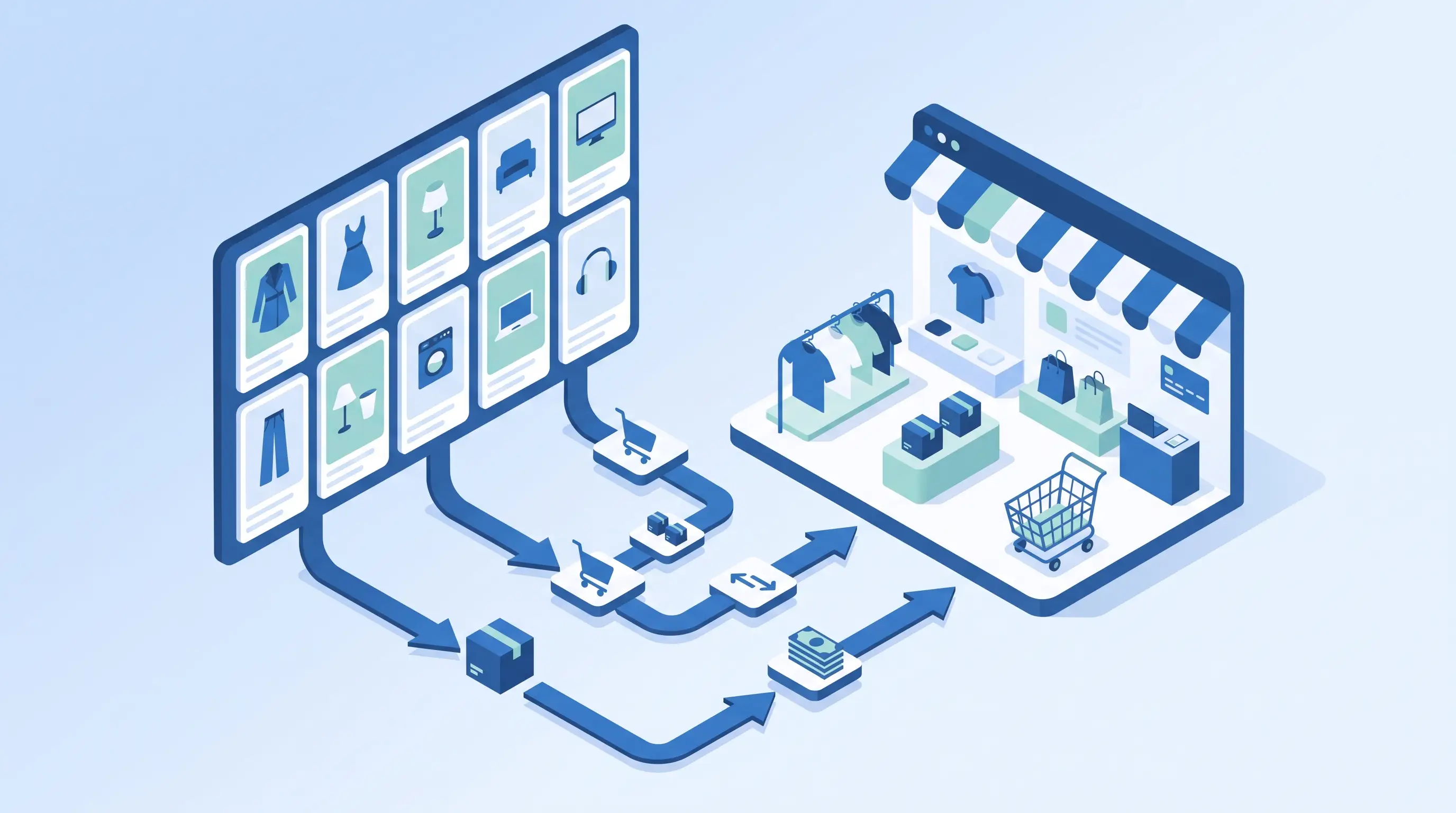

The short answer to how to increase social media sales is this: run your account like a conversion funnel, not a photo album. Build a sales-focused content mix, show your product in use, optimize your profile and bio link for clicks, guide interest toward purchases through DM and Story flows, and then measure the results with UTM tags and GA4. Follower count is just one input in that equation; what drives revenue is how many of those followers click through to your site and complete checkout. In this article, we walk through 10 tactics — with concrete examples, step by step — that we've seen generate conversions across the accounts we manage.
The social media story for many businesses in Turkey follows the same pattern: months of consistent posting, a slowly growing follower count, decent likes — but no clear sales figure showing up at the end of the month. The problem usually isn't a lack of effort; it's that the effort isn't tied to a sales goal. Each of the tactics below is designed to convert the content you're already producing and the audience you already have into revenue. None of them is a magic wand on its own — but when applied together, consistently, your social media account stops being a "brand awareness channel" and becomes a measurable sales channel.
Why Follower Count Alone Tells You Nothing
Follower count is what the marketing world calls a "vanity metric": it's satisfying to look at and looks good in a report, but on its own it can't be converted into revenue. An account with 100,000 disengaged followers can trail behind in monthly sales compared to an account with a well-built audience of 8,000–10,000. Because what drives sales isn't the size of your audience — it's how many of those people actually match the profile of a real buyer, and whether your content moves them to act.
The path from social media to sales is a four-step funnel: reach (number of people who see your content), engagement (those who stop to watch, save, or comment), clicks (those who go to your profile or website), and purchase. Follower count only feeds the top step of this funnel; if the lower steps are empty, a crowd waits at the top and never reaches the register. Each of the 10 tactics below strengthens a different step of the funnel — so think of them not as standalone items, but as pieces of a whole. If you want to place this framework within a broader strategy, What Is Social Media Management? What Does an Agency Do? is a solid starting point.
One caveat upfront: buying followers doesn't fix the funnel — it breaks it completely. Fake accounts drag down your engagement rate, reduce the algorithm's chances of showing your content to real buyers, and contaminate your lookalike audience data when you run ads later. A small but genuine audience is always more valuable than a large but fake one.
1. Sales-Focused Content Mix: Educate, Entertain, Sell
The dilemma "if I post products constantly, followers will tune out, but if I never post them, there are no sales" is real — and the solution is a balanced content mix. The practical rule: most of your content should deliver value, and a consistent portion should sell openly. Sales content shouldn't be shy; it should include the price, the benefit, and a clear call to action. A good starting balance for most SME accounts looks like this:
| Content type | Purpose | Example | Weekly share (suggested) |
|---|---|---|---|
| Educational | Build trust and expertise | "5 mistakes people make with at-home skincare" | 40% |
| Entertaining / relationship-building | Reach and connection | Behind the scenes, team moments, trend adaptations | 30% |
| Sales | Conversion and revenue | Product intro + price + promotion + clear call to action | 30% |
Let's work through a concrete example: imagine a brand selling handmade leather bags. Educational content could be "How to clean and store a leather bag"; entertaining content could be a "Day in the workshop" behind-the-scenes video; sales content would be "Our new-season shoulder bag, at this price, free shipping this week — check the link in bio." Notice that even the sales content includes a benefit and a clear next step — it doesn't just say "our product is beautiful."
Rebuilding this balance every week takes real discipline — which is why professional social media management work builds a content calendar entirely around this mixed approach. If you manage your own account, apply the same principle: at the start of each month, write out content ideas in three columns (educate, entertain, sell) and decide in advance which goes live on which day. During campaign periods — back to school, New Year, November sales — consciously increase the sales share; during quiet periods, build trust with educational content.
2. Social Proof and UGC: Your Most Persuasive Salesperson Is Your Customer
People believe what other customers like them have experienced, not what brands say about themselves. Customer reviews, usage photos, thank-you messages from DMs (shared with permission), marketplace and Google ratings — all of these are ready-made content raw material, and most businesses never mine this gold.
In the accounts we manage, the highest save and share rates almost always go not to professional studio shoots, but to candid usage videos shot by customers on their own phones. Perfect visuals don't always signal trust; real visuals do.
User-generated content (UGC) doesn't happen on its own — you need to build a system:
- Add a small card to your shipping package: "Tag us when you share your product — we'd love to feature you."
- Ask gently in a post-purchase message: a brief "Hope you love it — would you share a photo?" message sent a few days after delivery.
- Make a small gesture for those who tag you: a discount code valid on their next order, or a re-share on your account — that's enough motivation for most customers.
- If you're in a service business, show before-and-after: from hair salons to renovations, transformation visuals, shared with permission, produce powerful proof.
Two important rules. First, permission: always get approval before sharing a customer's content or review — a single post shared without permission can damage years of built-up trust. Second, organization: collect review screenshots in a Story Highlight called "Reviews." That way, anyone visiting your profile for the first time can reach dozens of real customer experiences with a single tap — a silent but effective sales rep.
3. Video That Shows the Product in Use
In 2026, the dominant social media sales format is short video, and what these videos all have in common is that they show the product in real life, not on a shelf. In cosmetics, that's the texture as the product is applied to skin; in apparel, the way a fabric drapes while walking; in food, the preparation and that first bite; in services, a behind-the-scenes look at the process. The moment a viewer can picture the product in their own life, they're one step closer to buying. Studio perfection is not required — a phone camera, natural light, and a genuine usage scenario is usually enough.
- Unboxing: the package-opening experience from the perspective of the customer who placed the order.
- Problem–solution demo: show the problem in 15–30 seconds, then show how the product solves it.
- "One product, three ways": a series showing the same product in three different scenarios (outfit, recipe, use case).
- Video reply to a question: take the most common question from your DMs and turn the answer into a video.
- Order packing: packaging and dispatch moments both build trust and create the impression that "orders are flooding in."
This format works hardest on TikTok; for the discovery dynamics and sales ecosystem there, check out our guide on How to Sell on TikTok. It's possible to repurpose the same video for Instagram Reels and YouTube Shorts, feeding three channels from one shoot — just remember to remove the platform watermark, since algorithms tend to deprioritize videos stamped with a competing platform's branding.
4. Profile, Bio, and Link: Get Your Storefront Click-Ready
When your content sparks interest, users typically do two things: visit your profile, and if convinced, click the link. Your profile is your store's storefront — and the "click" step of the funnel is largely won or lost right here. Your bio needs to do three jobs on one screen: say in a single sentence who you help and how, give a trust signal (something like "Same-day shipping across Turkey from Kayseri"), and include a clear call to action ("New-season products ↓").

Link strategy is also a critical link in the funnel. If you have a single campaign, send the bio link directly to that product page; if you have multiple destinations, use a simple link page — but no more than 3–4 options, not 10. The more choices you offer, the more clicks scatter and the lower the sales. Add a UTM parameter to every link — we'll cover measurement in the final tactic. Make your Story Highlights part of the storefront too: "How to Order," "Reviews," "Shipping & Returns" headings answer the questions on a new visitor's mind right when they need it.
A cautious note on Instagram's in-app shopping and product tagging features: these kinds of platform-native e-commerce features change by country and over time; their availability in Turkey has shifted more than once in the past and may shift again. So don't build your entire sales infrastructure on an in-app store; your own e-commerce site should always be your home base, while platform features serve as an extra storefront window when they're available.
5. DM Automation and Fast Replies: Engage While the Interest Is Hot
The unsung hero of social media sales is the DM inbox. In Turkey, many purchases still start with a "What's the price?" or "Is it in stock?" message — and how quickly you respond directly determines whether the sale happens. If you reply to an evening inquiry the next day at noon, the customer has already bought from somewhere else; interest is like metal — shape it while it's hot.
- Comment keyword → automatic DM: add "Write PRICE in the comments for details and pricing" to your post caption; set up a flow that automatically sends the price and a product link to anyone who types that word. It generates engagement and captures interest instantly.
- Prepare FAQ templates: use saved quick replies for recurring questions about delivery times, size charts, and return conditions — bring your response time down to minutes.
- Out-of-hours greeting message: an auto-reply like "We've got your message — we'll get back to you at 9 a.m. tomorrow" manages expectations and doesn't lose the customer.
- Human handoff rule: automation opens the door, but a person closes the sale. Especially for high-ticket products and custom requests, transfer the conversation to a real person as quickly as possible.
Two caveats: first, don't overdo the automation — an account that routes every message to a bot feels cold and untrustworthy; the goal is to balance speed with a personal touch. Second, measure the DM channel: if you assign a unique coupon code to sales closed through DMs (say, DM10), you'll see its real revenue contribution as a clear number at the end of each month.
6. Story Sales Flows: A Mini Campaign Every Day
Stories speak to the most loyal layer of your audience: people who choose to see you every day. That's why Stories, not the feed, are the most natural home for sales messaging. The approach that works isn't a single "product photo + price" card — it's a mini-scenario built from 4–6 frames:
- Hook: start with a poll or question — "Have you got your winter boots yet?"
- Problem: amplify the pain point — "Anyone who wore boots that let water in last winter knows the feeling..."
- Solution: a short video showing the product in use.
- Proof: a screenshot of a real customer review.
- Offer: promotion + countdown sticker — "Discount with this code ends tonight."
- Close: a clear call to action with a link sticker — "Tap to explore."
Polls, questions, and swipe stickers don't just send an engagement signal to the algorithm — they're free market research. Put two color options in a poll and make the winning color the face of the campaign: it makes your audience feel part of the decision and reduces your stock risk at the same time. The 24-hour expiry of Stories is also a sales advantage: "This code is only valid today in Stories" creates natural urgency — no artificial scarcity needed.
7. Live Streams and Campaign Moments
A live stream is trust-building in fast-forward: viewers ask questions in real time, see the product from every angle, and know there's a real person on the other side. A proven formula for sales: choose a fixed day and time (say, Wednesdays at 8:30 p.m. — consistency builds habit), focus on no more than 3–5 products per stream, announce an exclusive coupon code for live viewers, and after the stream, clip the strongest moments into Reels to get another week's worth of content from a single session.

Campaign moments are also the natural peaks of social media sales: November discounts, pre-holiday periods, season changes, back to school... Don't walk into these periods without a plan; build a content series with at least three phases — a teaser that builds curiosity ("Big news coming Friday"), the campaign launch, and a final-day reminder. X (formerly Twitter) moves fast; carrying campaign announcements there in short form provides additional visibility. When campaign traffic picks up, your site's cart experience needs to be ready too — our cart abandonment reduction guide will help.
Convert Traffic into Revenue: Clear CTAs, Ads, and Measurement
The final three tactics focus on the bottom half of the funnel — the part that turns interest into money. No matter how well the upper steps work, if these three are weak, the effort stays on social media and never reaches the register.
8. A Clear Call to Action (CTA) from Content to Site
Every piece of sales content should have one single, clear action: "Check the link in bio," "DM us CATALOG," or "Tap the link in the Story." Three different calls in the same post is effectively no call at all; decision fatigue kills the click. Always dedicate the last sentence of your caption to the action, and make sure the page the link opens is a perfect match for the content: the link you feature in a Reel should go directly to that product's own page, not to a category page. Once traffic reaches your site, the discipline that takes over is conversion optimization — check out our conversion rate optimization (CRO) guide to get your site sales-ready.
9. Amplify Organic Reach with Ads
Organic content tells you what's working; ads scale what's working. The most efficient starting point isn't designing fresh ad creatives from scratch — it's taking the content that has already proven itself organically (your most saved post, your top-commented sales piece) and amplifying it with budget. The second step is remarketing: show follow-up offers to people who visited your profile, watched your video all the way through, or came to your site without buying — this audience already knows you, so conversion costs are typically far lower. We've put together a Meta Ads guide that walks through setup step by step; we also recommend learning to calculate ROAS to track the return on every TL you spend. Test with a small budget, scale the winning combination — unplanned bulk spending is where small business budgets evaporate fastest.
10. Measurement: UTM Tags and GA4
The answer to "is social media driving sales?" should be data, not a gut feeling. Add a UTM parameter to every link in your bio, Stories, and ads — for example: utm_source=instagram&utm_medium=social&utm_campaign=november-deals. That way, in GA4 you can see separately how many visits and how many sales each platform and each individual campaign generated. At the end of each month, don't just look at the likes report — ask three questions: which content type drove the most clicks, what share of those clickers actually bought, and which campaign produced the highest revenue? Update your content mix based on the answers — which brings you back to tactic 1. That's the loop, and it makes your account a little more accurate every month. Our Google Analytics guide walks you through GA4 setup and e-commerce reporting from start to finish.
Conclusion: Those Who Count Sales Win, Not Those Who Count Followers
Let's wrap up. Increasing social media sales isn't a single magic move — it's a system of parts working together:
- Build your content mix on an educate-entertain-sell balance; don't be shy about sales content.
- Collect customer reviews and UGC systematically and put them on display.
- Produce short videos that show the product in use, not just sitting on a shelf.
- Simplify your profile, bio, and link so they lead to a sale in a single tap.
- Reply to DMs fast; use automation to open the door, but have a person close the sale.
- Use Stories as 4–6-frame mini sales scenarios.
- Meet live streams and campaign periods with pre-planned content series.
- Give every piece of content one clear call to action; link to the right page.
- Scale organically proven content with ads; use remarketing.
- Tag every link with UTM, measure outcomes in GA4 as sales, and update your mix based on the data.
Every item on this list can be acted on today; but producing content, managing DM traffic, running the campaign calendar, and measuring everything — all at the same time, every week, without a break — is a serious commitment. As Alis Dijital, we manage the brands we work with using exactly the funnel logic described in this article, and we report success not with likes but with revenue. If you're ready, you can explore the details of our social media management service, or request a free analysis to see the sales potential hiding in your current account.