
Social media management is the planned execution of all processes involved in maintaining your brand's presence on platforms such as Instagram, TikTok, Facebook, X, LinkedIn, and YouTube — including strategy, content calendar, design and video production, community management, ad coordination, and reporting. When you hand this work to an agency, the agency analyzes your target audience, builds the monthly content plan, produces and publishes posts, responds to comments and messages, supports with advertising when needed, and reports back every month on what was achieved. In the 2026 Turkish market, monthly fees range widely by scope: basic single-platform packages start below ten thousand TL, while comprehensive packages that include video production and ad coordination can reach six-figure sums.
Even though the definition looks clear on paper, things get muddled in practice — because in Turkey the content of packages sold as "social media management" varies so much from agency to agency that two businesses can pay the same amount and receive completely different services. One might get 30 original pieces of content per month, a shoot day, and daily message management; the other might end up with 8 template-generated visuals and nothing else. In this article we break down the real scope of the service, what an agency actually does month by month, 2026 pricing ranges, and the questions you need to ask before signing a contract.
What Does Social Media Management Actually Cover?
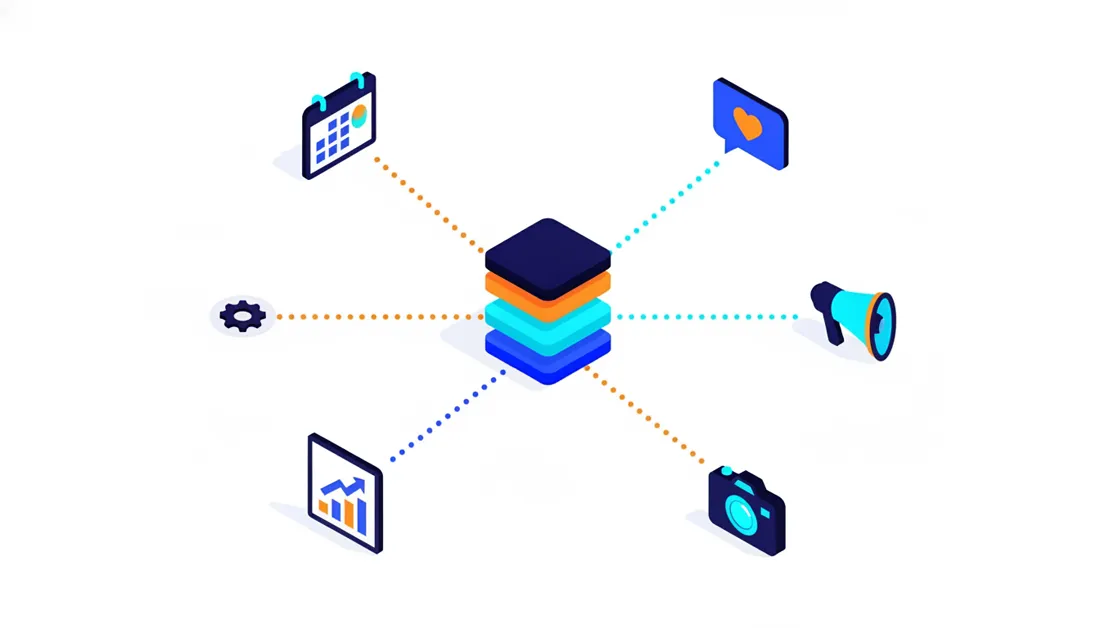
Without knowing the scope, you can neither compare prices meaningfully nor evaluate the service you receive. Professional social media management consists of six core work streams. Ask every agency you get a proposal from which of these six items is included in the package — because nearly all the price differences stem from the presence or absence of these items.
1. Strategy and positioning
The invisible but most critical layer of the work. Who are we producing content for, what are competitors doing, what will the brand's tone of voice be, which content pillars (education, product showcase, behind the scenes, social proof, etc.) will be used in what ratio? An account without a strategy is one that has to rethink what to post every morning — which means an inconsistent brand image and a production tempo that burns out within months. A good agency starts not with content but with a written strategy document.
2. Content calendar and planning
The monthly content calendar is the plan showing which day, which platform, which format, and which message will be published. Special occasions (national holidays, Mother's Day, Black Friday), campaign periods, and seasons specific to your industry are scheduled into this calendar weeks in advance. The calendar is also the foundation of your approval process: you review content in bulk before it goes live and request revisions if needed.
3. Content production: design, copy, and video
Visual designs, post captions, stories, and video... In 2026, the undisputed engine of social media growth is short-form video: Reels and TikTok formats reach significantly more new people than static posts. That's why whether a package includes video, how many pieces are produced per month, and who provides the raw footage (agency shoot or material you supply) are among the biggest drivers of price. Learn the concept of the "shoot day" here: the agency team visits your business at set intervals for bulk shooting, and that raw material is used in content production for months.
4. Community management: comments, messages, complaints
Social media is not a one-way broadcast channel. Responding to comments, handling incoming messages (DMs), managing complaints before they escalate into crises, and directing potential customers toward a sale are all part of community management. The most common pattern we see in the accounts we manage: the questions closest to a purchase come not in comments but in DMs, and a message left unanswered for a few hours has already been sent to a competitor. Make sure to clarify whether community management is included in the package, and if so what hours it covers.
5. Ad coordination
Organic reach has been declining across all platforms for years; getting your content in front of your target audience typically requires ad support. Two models exist here: some agencies provide basic support at the level of post boosting, while others offer full ad management with targeting, budget planning, and creative testing. Full ad management is generally a separate service priced separately; if you want to understand how that side works, our Meta Ads guide is a good place to look. When receiving proposals, ask what "ads included" actually means.
6. Reporting and optimization
At the end of the month: what did we produce, how many people did we reach, which content worked, how much traffic did we send to the site, and how many inquiries or sales came from it? A report is not just a summary of the past — it's the feedback loop that shapes the plan for the next month. Working with a team that doesn't report, or only sends a follower-count graph, is like driving in the dark.
What Does an Agency Do? Step by Step from Onboarding to Monthly Rhythm
The answer to "what does an agency actually do every month?" differs between the first month and subsequent months. The typical flow works as follows:
- Onboarding and access setup (first week): Account access is arranged through Meta Business Manager and similar structures. The critical rule: you always remain the account owner; the agency is granted only permissions.
- Current state and competitive analysis: Your past content performance, audience composition, and the social media practices of 3–5 competitors are reviewed.
- Strategy document: Target audience definition, platform priorities, brand voice, content pillars, and success metrics are put in writing.
- First content calendar and your approval: The calendar for the following month typically arrives in the last week of the current month; you approve it or request revisions.
- Production and publishing: Designs, copy, and videos are produced and published at the right day and time using scheduling tools.
- Daily community management: Comments and messages are answered within the agreed hours; opportunities that could convert to sales are flagged to you.
- End-of-month report and refinement: Performance is reviewed together; underperforming content types are cut, and the volume of what's working is increased.
The first 2–4 weeks are a setup period; expecting visible growth during this time is unfair. Once the cycle of consistent production, response, and optimization is established — typically from the third month onward in the accounts we manage — reach and engagement curves begin to trend meaningfully upward.
You Don't Have to Be Everywhere
One of the most expensive mistakes is spreading across five platforms at once by saying "let's be everywhere." Every platform means a separate content format, a separate language, and a separate workload; with a fixed budget, the more platforms you add, the lower the quality on each. The right question is not "which platforms should we be on?" but "on which platform does our customer make their buying decision?"
- E-commerce and B2C products: The Instagram + TikTok pairing is sufficient in most cases. For visually driven categories (fashion, home, beauty, food), these two are the primary discovery engines; we covered how TikTok connects to sales in our TikTok sales guide in detail.
- B2B and corporate services: LinkedIn is the primary platform; Instagram plays more of a showcase and employer branding role.
- Local businesses (restaurants, clinics, beauty centers): Instagram + Google Business Profile. Location-based discovery and "near me" searches come from this combination.
- Brands targeting younger audiences: A TikTok-first strategy is worth considering — but only if you have the capacity to keep pace with the speed of trend production.
- YouTube: A long-term asset; strong for brands that can produce educational and in-depth content, but it has the highest production cost of any channel.
The practical rule: managing two platforms well always produces better results than managing five platforms adequately. Make the decision to add a new platform only after production and response discipline on existing platforms is firmly established.
Social Media Management Pricing in Turkey in 2026
The honest answer to the price question is "it depends on scope" — but that answer alone isn't useful. The table below summarizes the common package tiers and the monthly ranges widely seen in the Turkish market as of 2026. Read the figures not as fixed prices, but as a map to help you position the proposals in front of you.
| Package tier | Typical scope | 2026 monthly range (excl. VAT) |
|---|---|---|
| Basic | Single platform, 8–12 static posts + stories per month, basic community management, summary report | 8,000 – 25,000 TL |
| Mid-tier | 2–3 platforms, 12–20 pieces of content per month (4–8 video/Reels), calendar approval workflow, regular community management, detailed monthly report | 25,000 – 60,000 TL |
| Comprehensive | Multi-platform, monthly shoot day, professional video production, ad management coordination, influencer collaborations, frequent reporting | 60,000 – 150,000+ TL |
There are concrete reasons the ranges are this wide:
- Video quantity and quality: There is a significant cost difference between a simple Reels shot on a phone and a scripted, edited production.
- Shoot day: Having the agency team come to your location for filming (travel, equipment, crew costs) noticeably raises the price.
- Community management intensity: A response commitment within business hours and one that covers weekends as well are not the same price.
- Ad management: Generally a separate line item; the ad budget always belongs to you and is not included in the package fee.
- Agency scale and track record: An experienced team with proven results naturally commands higher pricing.
Two practical warnings: first, when comparing proposals, always ask whether the price is inclusive or exclusive of VAT; second, "all-inclusive" packages that appear far below market rates typically either use template-generated content or have no community management in practice. If you want a realistic scope and budget framework for your own business, you can use our free analysis wizard — it offers a tailored roadmap based on your current situation.
What's In and What's Out? Clarify Before You Sign
Nearly all disputes in agency relationships arise from scope details that weren't discussed upfront. Ask the following at the proposal stage and get them written into the contract:
- Content count and format breakdown: "16 pieces of content per month" isn't enough; how many are video, how many are designed graphics, how many are stories?
- Revision rights: How many revisions per piece of content are included, and how are additional revisions priced?
- Shooting and visual sourcing: Is a shoot day included in the package? If not, will visuals come from stock imagery or raw material you provide?
- Ad distinction: Is ad management included, which account does the budget run from, and is the management fee fixed or a percentage of the budget?
- Community management limits: Which hours, which channels, and who steps in during a crisis?
- Ownership and delivery: Who owns the source files for produced designs and videos, and will they be delivered if the relationship ends?
- Additional work pricing: How are requests for urgent out-of-schedule content or extra campaign visuals priced?
8 Questions to Ask When Choosing an Agency
Walk into the meeting with this list; the answers you receive will reveal both the agency's maturity and the real value of the package.
- "Do you manage any accounts in my industry?" Industry experience isn't mandatory, but it shortens the learning curve. Ask for case studies — not just designs, but results too.
- "Who will actually produce the content?" A senior team closing the sale while a junior does all the work is the industry's classic complaint. Get to know the person you'll communicate with day-to-day from the start.
- "How many pieces of content per month, in which formats, and what's the video ratio?" In 2026, a package without video is a package without a growth ambition.
- "How does the approval process work?" How many days before publishing do you see the content, and how are revision requests handled?
- "Who answers comments and messages, during what hours?" How quickly and how are messages that could convert to sales flagged to you?
- "Which metrics will I see in the report?" Don't settle for a follower-count graph; ask for reach, profile visits, site clicks, and inquiry numbers.
- "Is ad management included in this package?" If yes, which ad account does the budget run from, and how is the management fee calculated?
- "What is the contract term, and what happens to accounts and files if I leave?" Get written assurance that account ownership stays with you and that the content archive will be delivered.
Red Flags: Be Cautious When You Hear These Promises
- Follower guarantees: A team promising "10,000 followers guaranteed in three months" is either buying bots or targeting a contest-inflated audience that doesn't buy. Real growth can't be guaranteed; what can be guaranteed is process and work quality.
- "We'll make it go viral" claims: Viral content can't be planned; what can be planned is systematic production and regular testing. A viral promise is an announcement of an inability to manage expectations.
- All-inclusive pricing far below market: The monthly cost of a proper content team is well-established; a proposal where the math doesn't add up means either template content or service that exists only on paper.
- Working without reporting: A "just look at the content, leave the rest to us" attitude is an escape from accountability.
- Opening accounts in their own name: If the ad account, Business Manager, or profile ownership sits with the agency, your digital assets are held hostage when the relationship ends.
- Starting without a contract: If scope, price, termination, and delivery conditions aren't in writing, a dispute is only a matter of time.
Your Side of the Work: What the Agency Will Need from You

The attitude of "I'm paying for it, don't bother me with the rest" is the mindset that most often produces disappointment in social media. An agency can learn your brand's voice and replicate it; but it cannot produce the real life flowing inside your business in your place. The most common bottleneck we see with our clients is not content quality but a lack of input: a business that doesn't send raw footage, that announces a campaign at the last minute, inevitably ends up with a calendar of stock visuals — and followers notice immediately.
- Raw footage flow: Production, packaging, your team, customer moments... Regular 15–30 second raw videos shot on a phone are more valuable than the most expensive stock imagery.
- Campaign, inventory, and price information: Discounts, new products, out-of-stock items — this information needs to reach the agency in time; corrections after publishing erode trust.
- Quick approvals: A business that sits on calendar approvals for days breaks its own publishing schedule. Designate a single authorized approver.
- Expertise transfer: Share the 20 questions your customers ask you most often with the agency; the best-performing educational content almost always comes from this list.
- Face and voice: Businesses where the owner or team members appear on camera consistently generate more trust and engagement than anonymous corporate content.
How Is Success Measured? Business Outcomes, Not Follower Count
Follower count on its own is a vanity metric that can't be converted into revenue. 10,000 genuine, engaged followers are worth many times more than 100,000 irrelevant ones. A healthy measurement framework has three layers:
- Health metrics: Reach, engagement rate, video watch time, follower quality. These show whether the account is moving in the right direction.
- Bridge metrics: Profile visits, bio link clicks, social traffic to the site. Tracking this properly requires links to be tagged with UTM parameters and your GA4 setup to be working correctly.
- Business metrics: Sales inquiries from DMs, leads who filled in a form, sales measured by coupon code, and on the ad side, ROAS. This is the layer that actually needs to be discussed at month end.
A collaboration whose reports never touch the third layer will drift over time toward "the visuals look nice but we don't know the impact on sales." If ad budget is being spent but sales aren't coming, we examined where to look for the problem in our article Why Meta Ads Aren't Generating Sales through eight common mistakes; you can use that framework as a reference when setting goals with your agency.
Should You Hand It to an Agency or Handle It In-House?
The honest answer: an agency isn't right for every business. A small business owner who can set aside one hour a day and doesn't mind being on camera can perfectly well manage their own social media at the start. Problems begin when the scale grows: consistent content production requires regular working time, design and video editing require skill, community management requires continuity. Once the business owner's time is more valuable in their core work, outsourcing becomes economically sensible. There's a middle path too: the hybrid model — leaving strategy and production to the agency while keeping camera-facing content and sales conversations in DMs in-house — is one of the most effective setups we've seen among our clients.
If you're thinking of outsourcing your social media but aren't sure where to start on scope and budget, at Alis Dijital we work with you to define platform priorities, content plans, and realistic budgets based on your business goals. You can review the scope of our social media management service and reach out with any questions; at the first evaluation meeting, we offer an actionable roadmap — not a sales pitch.