"iyzico, PayTR, or a bank virtual POS (payment gateway)?" — the question every business asks when starting out in e-commerce or switching platforms. The answer depends on your store's volume, product price range, installment needs, and technical capacity. A wrong virtual POS choice can make a difference of tens of thousands — even hundreds of thousands — of TL relative to annual revenue. In this guide we transparently compare the three main virtual POS categories used in Turkey: bank POS accounts, payment service providers (PSPs), and platform-integrated POS solutions.
An important note: individual commission rates vary from provider to provider, and even from store to store within the same provider. The figures below are general market ranges; before making a concrete decision, always get quotes from 2–3 providers based on your store's actual volume.
If you're opening a new store, we recommend first reading our e-commerce site launch guide and our e-commerce cost guide — the virtual POS decision is one part of the overall platform decision, and those two articles provide the context.
1. What Is a Virtual POS? Three Main Categories
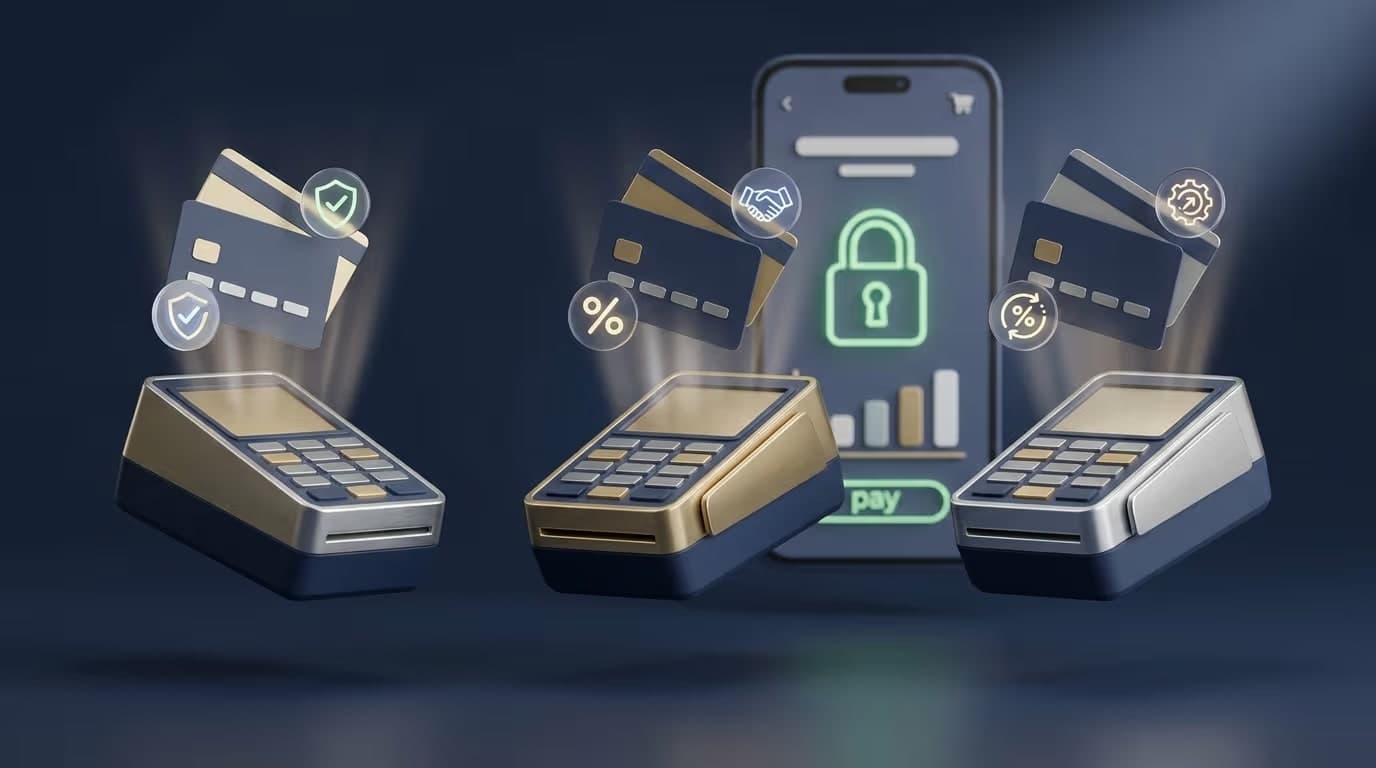
A virtual POS (payment gateway) is the infrastructure that lets you accept card payments over the internet. In Turkey it comes in three main categories:
- Bank virtual POS: A direct contract with the bank. Examples: Garanti BBVA Virtual POS, Akbank, İş Bankası, Ziraat. Generally low commission, but the integration and contracting process is more complex.
- Payment service providers (PSPs): iyzico, PayTR, ParamPos, Birleşik Ödeme. Access to multiple banks through a single integration. Commission is average; setup is easy.
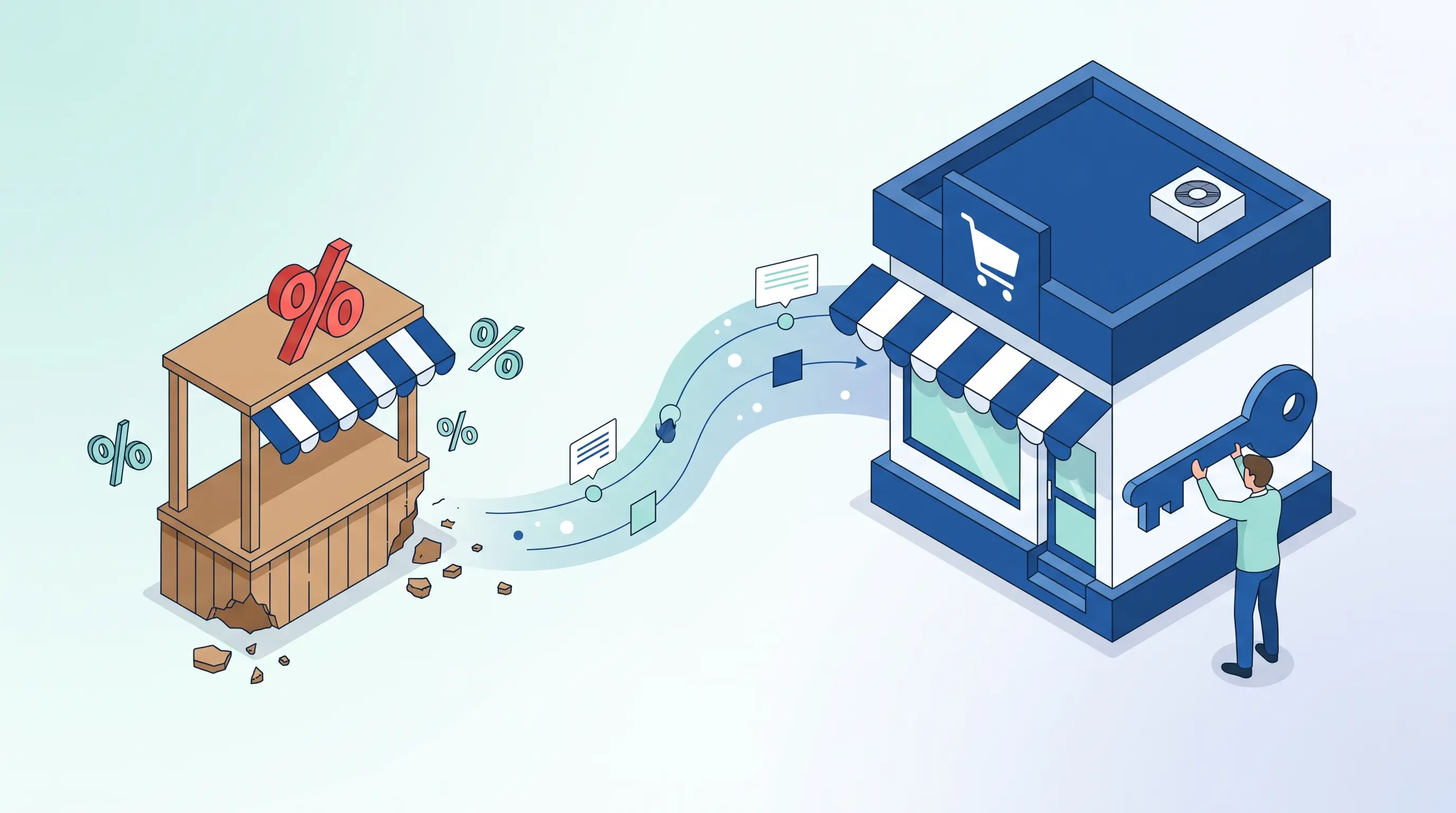
- Platform-integrated POS: The payment solution built into the e-commerce platform. The most common example in Turkey is ikas's integrated POS structure. Near-zero setup effort; but there is a dependency risk.
Each of these three categories has its own advantages and disadvantages. Before making the right choice, ask yourself three questions: what is my monthly revenue target? do I need installments? do I have a technical team?
2. Bank Virtual POS Accounts: Low Commission, High Friction
The virtual POS services of Garanti BBVA, Akbank, İş Bankası, Yapı Kredi, Ziraat, and other major banks are the lowest-commission option for high-volume stores. Typical characteristics:
- Commission: 1.4%–2.5% for single-charge transactions; an additional 0.5%–1.5% for installments
- Fixed monthly fee: zero at some banks, 200–500 TL/month at others
- Settlement time: T+1 to T+5 (depending on bank and account type)
- Integration: Each bank uses its own API standard — requires developer support
The biggest advantage of a bank POS is that commission decreases as volume grows, and bank reconciliations are direct. The disadvantage: if you want to use more than one bank POS, you must manage a separate contract, separate integration, and separate accounting flow for each.
3. Payment Service Providers (iyzico, PayTR, ParamPos)
Payment service providers give access to multiple banks' POS accounts through a single integration. Commission is slightly higher than banks, but the operational overhead is lower.
iyzico:
- Commission approx.: 2.49%–3.49% range for single-charge
- Installment commission: increases with the number of installments
- Setup: Fast, strong documentation
- Settlement: T+1 standard, T+0 available for a fee
PayTR:
- Commission approx.: 1.99%–3.29% range (depending on agreement and volume)
- Two integration options: iFrame and Direct API
- Settlement: T+1 standard
- Pop-up and quick integration convenience
ParamPos:
- Commission approx.: 1.99%–2.99% range
- Developer-friendly API
- Preferred as a backup payment method
These figures are market ranges; actual rates for a specific store will differ.
4. Platform-Integrated POS (ikas Example)
The ready-made POS solution offered by your platform is the easiest option from a setup perspective. As described in our article on ikas's virtual POS and commission structure, platform-integrated POS solutions typically:
- Zero setup effort — comes bundled with the platform
- Reconciliations managed within the platform panel
- Commission range: comparable to PSP levels, sometimes marketed lower
- Advantage: freedom from managing multiple providers
- Disadvantage: dependency risk on a single platform; adding an alternative POS involves more manual work
For new stores, the platform-integrated POS is the fastest way to get started in the first 1–2 years. As volume grows, adding a bank POS or a payment service provider as a complement is worth evaluating.
5. Components of Commission Structure
The phrase "2.5% commission" is only the surface figure. The real total cost consists of several components, and the 2026 typical ranges are as follows:
- Base single-charge commission (PSP commission): 1.5%–4%. PayTR next-day ~1.79%; iyzico corporate entry level ~3.99%. Negotiable based on volume.
- Deferred settlement single-charge (30 days): ~0.59%. Your funds arrive in the account 30 days later; advantageous if cash flow is healthy.
- Installment interest surcharge: In common practice in Turkey, the seller bears the installment cost. The 2026 typical tariff by number of installments is as follows:
| Number of Installments | Installment Surcharge Paid by Seller (approx.) |
|---|---|
| 2 Installments | ~7.53% |
| 3 Installments | ~9.57% |
| 4 Installments | ~11.60% |
| 5 Installments | ~13.65% |
| 6 Installments | ~15.68% |
| 7 Installments | ~17.71% |
| 8 Installments | ~19.75% |
| 9 Installments | ~21.80% |
| 10 Installments | ~23.82% |
| 11 Installments | ~25.86% |
| 12 Installments | ~27.90% |
The rates above are averages of typical 2026 bank card installment tariffs (advantage, axess, bonus, cardfinans, bankkart, maximum, paraf, world, etc.). Figures may vary by provider and card; lower rates are possible under special agreements.
So when a customer buys a 1,000 TL product in 6 installments, the seller typically pays ~15.68% bank installment interest on top of the 1.79%–3.99% PSP commission; total payment cost reaches 17%–20%. This difference is the real answer to the question "how much profit do I make if I sell on installments?" when pricing your products.
- Fixed monthly fee or minimum transaction volume: absent at most providers; at some, ₺200–500/month.
- Per-transaction fixed fee: at some providers 0% but ₺0.25–1 TL per transaction fixed (watch out especially for low-basket setups).
If your store processes 500 transactions per month with an average basket of 200 TL, a difference of just 0.20% translates to 12,000 TL per year. That's why saying "the percentage difference is small" can be misleading in cumulative terms.
6. The Impact of Installments: The Deciding Factor
In Turkey, for products over 500 TL, installments are a factor that increases cart conversion by 30%–50%. However, installment commission varies from provider to provider. Looking only at the single-charge rate when comparing is a major mistake.
A practical test: pull your store's transaction breakdown for the past 3 months (ratio of single-charge vs. installment transactions, average number of installments). When requesting quotes from providers, ask them to calculate the blended commission rate based on this breakdown. That single blended rate is your real cost.
7. Costs Beyond Commission: Ask These Before You Sign
Questions that should be on your list before signing a contract:
- Is there a fixed monthly fee? How much?
- Is there a minimum monthly revenue requirement?
- Are failed transactions charged?
- Is a transaction fee applied in case of chargeback?
- What is the settlement period? Is there an extra charge for T+0?
- Is the commission refunded on refund transactions?
- What are the contract term, termination conditions, and account closure fees?
Overlooking these items can cause a "low-commission" provider to actually be more expensive in practice.
8. Which POS Is Right for Which Business?
General recommendations by store profile (not definitive — use as a starting point):
- Monthly revenue < 100,000 TL: Payment service provider (iyzico, PayTR) or platform-integrated POS. Operational simplicity is the most important criterion.
- Monthly revenue 100,000–500,000 TL: Payment service provider + one bank POS as backup. Gradual commission negotiations can begin.
- Monthly revenue > 500,000 TL: Direct bank POS accounts + one PSP as backup. Commission negotiations yield meaningful returns.
- High average basket (luxury/gifts): Installment commission is critical; choose the provider with the best installment rates.
- Low basket + high transaction volume (FMCG, small items): Avoid providers with a per-transaction fixed fee.
- E-export: Providers with foreign card acceptance and foreign currency solutions (e.g. iyzico GlobalPay and international alternatives).
9. Running Our Own Numbers for Commission Comparison
General figures provide direction, but the real decision is made knowing your own store's transaction profile. On our virtual POS commission calculator page, you can enter your average monthly revenue, average basket size, and installment distribution to calculate your actual commission burden.
To see how commission affects your profit margin, our profit margin calculator is useful; to check the return on your ad investment, our break-even ROAS calculator helps.
10. Redundant Setup: Don't Lock Yourself into a Single POS
In an e-commerce store, the most expensive half-hour is the one where the payment page isn't working. A temporary glitch in a bank's system causes both lost sales and lost customer trust on the other side. That's why using two independent providers (e.g. PayTR + iyzico, or a bank POS + iyzico) is standard practice for medium-to-large stores.
A smart routing algorithm directs each transaction to whichever POS is healthy at that moment. The user doesn't notice; the sales flow isn't interrupted.
11. 3D Secure: A More Important Issue Than Commission
With BDDK (Banking Regulation and Supervision Agency) regulations in 2024–2025, 3D Secure use for internet transactions became effectively mandatory. For transactions processed without 3D Secure, chargeback risk falls entirely on the seller. When selecting a virtual POS provider, check:
- Does the 3D Secure integration work smoothly across browsers and on mobile?
- Is there a fallback flow if 3D fails, so that conversion doesn't drop?
- Is multiple 3D attempts on the same card in the same session supported?
In practice, providers with a weak 3D Secure implementation are the leading cause of cart losses that go unnoticed. When a user gets stuck on the 3D step and abandons the site, that loss appears in neither GA4 nor the POS report — which is why testing is essential.
12. Chargeback Management: Fraudulent Order Risk
In online sales, fraudulent orders, stolen card use, or a customer's bank reversing a charge through a "I didn't receive the product" dispute (chargeback) are unavoidable risks. Typical chargeback rates are between 0.1%–1%; they vary by sector (high in electronics, luxury goods, digital products; low in textiles, food, and low-basket items).
Questions to ask when choosing a virtual POS:
- How are chargebacks notified (email, panel, API)?
- How many days does the dispute filing process take?
- What is your historical chargeback win rate?
- If I receive many chargebacks, will my commission be raised or my account closed?
With bank POS accounts, chargeback management is generally stricter; with payment service providers the process is more streamlined, but the final decision still belongs to the bank.
13. Marketplace vs. Own Site: POS Strategy Differences
If you sell through a marketplace (Trendyol, Hepsiburada), payment collection is handled by the marketplace — you have no direct relationship with a POS. As we noted in our marketplace integration guide, when marketplace commission (10%–20%) and POS commission are considered together, the gross profit margin from selling through your own site is higher.
That's why in a hybrid strategy (marketplace + own site), your virtual POS choice directly determines the profitability of sales on your own site. If you want to draw marketplace traffic to your own site, a fast, frictionless checkout experience is essential.
14. Reconciliation: The Most Neglected Item After Commission
Signing a virtual POS contract isn't enough; you must check bank and provider reconciliations every month. The small gap between expected receipts and actual receipts — caused by chargebacks, returns, system outages, and similar factors — can cumulatively reach 5,000–15,000 TL per year.
The majority of stores that don't do regular reconciliation realize far too late that their actual POS costs are higher than the contracted rate. A monthly — or at least weekly — reconciliation habit brings that loss to zero.
15. A Concrete Example: The Numbers for a Store with 500,000 TL Monthly Revenue
Let's replace theory with a concrete calculation. Our assumptions:
- Monthly revenue: 500,000 TL
- Average basket: 350 TL
- Monthly transaction count: ~1,430
- 40% of transactions single-charge, 60% on 3–6 month installments
At a typical payment service provider, the blended commission rate comes to roughly 2.8% — meaning 14,000 TL per month, or 168,000 TL per year in POS commissions. When the same store switches to a direct bank POS and brings the blended commission down to 2.2%, the monthly figure drops to 11,000 TL; annual savings are approximately 36,000 TL.
This saving is added directly to profit. For this store operating at an average 25% net margin, 36,000 TL in commission savings is equivalent to generating an additional 144,000 TL in revenue. In other words, managing commission correctly is a more powerful profit tool than increasing the ad budget by 30%. You can run these kinds of concrete comparisons for your own store on our commission calculator page and cross-check the profit impact with our profit margin calculator.
16. The 5 Most Common POS Mistakes
- Signing a contract based only on the single-charge commission. Calculating the blended commission is non-negotiable.
- Operating with a single POS provider. Without a backup, sales stop during any outage.
- Not running reconciliation checks. The gap between the contracted rate and actual deductions goes unnoticed.
- Not factoring installment commission into pricing. The erosion of profit margin goes undetected.
- Not renegotiating when volume grows. Most stores exceeding 500K monthly revenue can lower their commission by 0.3%–0.5%; a simple letter is all it takes.
Recommended Reading on Virtual POS, Payments, and E-Commerce Finance
- Payments Systems in the U.S. — Carol Coye Benson. The essential read for understanding how the payment ecosystem works.
- The PAYTECH Book — Susanne Chishti et al. An ecosystem guide to modern payment technologies.
- Lean Analytics — Alistair Croll & Benjamin Yoskovitz. A classic for measuring commission and operational metrics correctly.
- Profit First — Mike Michalowicz. For financial discipline when commissions are eroding profit.
One Step Before Making the Right Choice
Virtual POS selection is one of the 3 strategic decisions that directly affects your e-commerce profit margin (the other two: platform and shipping). The wrong provider costs thousands — and in large stores, tens of thousands — of TL in lost value per year. The right provider makes the same revenue more profitable.
If you want to clarify which POS is right for your store, at Alis Dijital we review your transaction profile, target volume, and existing contracts under our e-commerce consulting service and produce a concrete recommendation. We also manage the entire payment integration process from start to finish for stores migrating to ikas. You can apply for a free digital analysis to discuss your situation, or contact us directly.