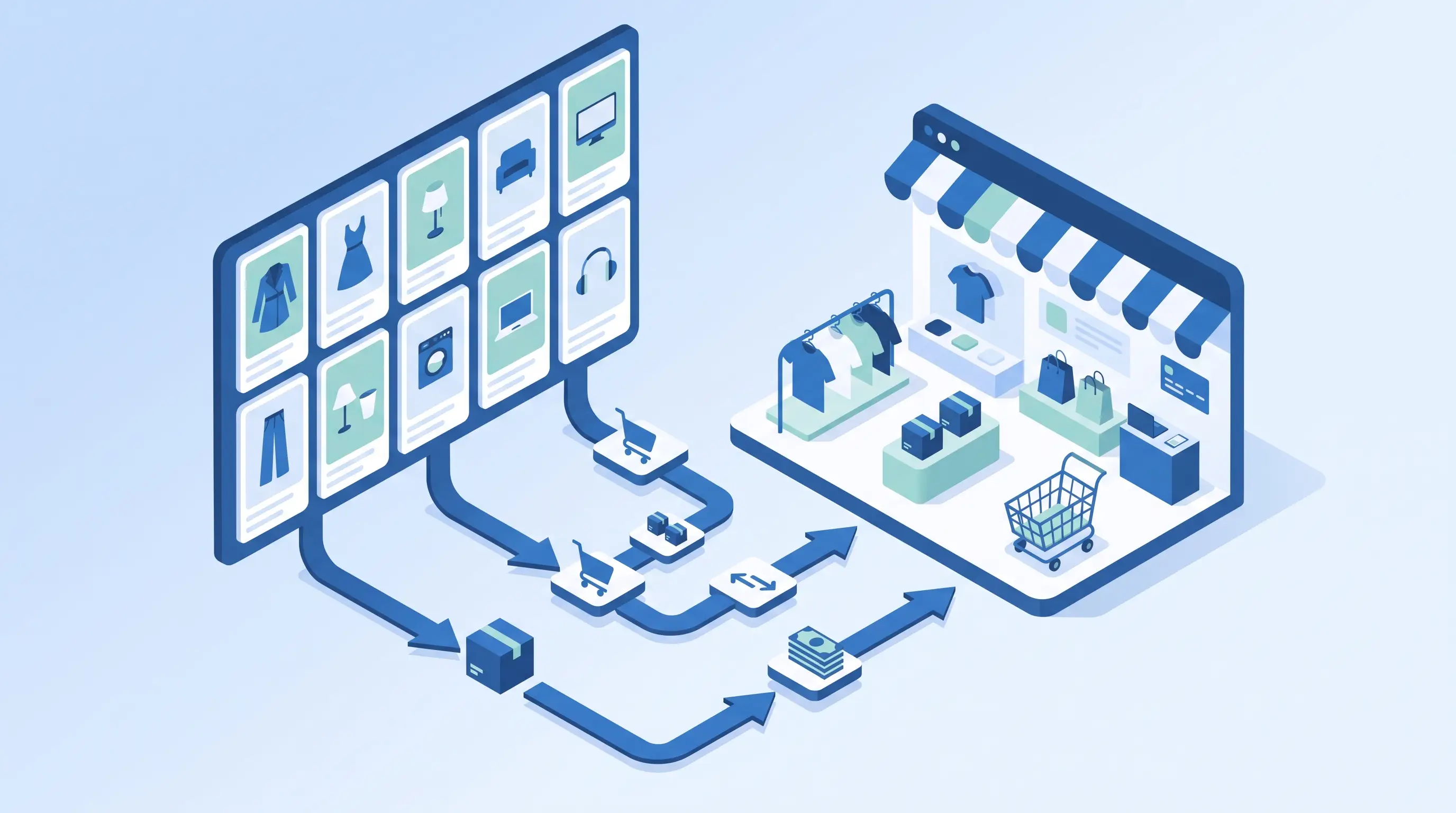

Instagram advertising has no fixed price list; costs are determined in real time within Meta's auction system. In the Turkish market in 2026, the cost per thousand impressions (CPM) typically moves across a wide band — from tens of liras to a few hundred liras — depending on the industry, target audience, and creative quality. Cost per click (CPC) ranges from a few liras to the mid-twenties in most industries. Technically you can run ads with as little as 100 TL per day, but for a sales-focused campaign to learn properly, a monthly budget in the range of 10,000–30,000 TL is a far more realistic starting point. In this article we walk through how costs form, what factors push the price up, and how to get more sales from the same budget — step by step.
Be skeptical of anyone who answers "how much does Instagram advertising cost?" with a single figure — because that's not how the system works. There is no fixed price tag on an Instagram ad like on a product on a shelf: you set your budget, and Meta uses that budget to determine who sees your ads, how often, and at what cost, based on auction results. The clearest pattern we see in the accounts we manage is this: businesses that understand the cost logic and plan accordingly get dramatically better results from the same budget than those who randomly hit the "Boost Post" button. So read this article not as a price list, but as a system guide that will help you build your budget correctly.
No Fixed Price, Just an Auction: How Costs Are Formed
Every ad impression on Instagram is sold in an auction happening in milliseconds — without you even noticing. For every user whose screen your ad might appear on, all advertisers who want to reach that person compete simultaneously. The winner is not simply the highest bidder; Meta evaluates three components together:
- Bid: Your budget and bid strategy. For most businesses, the default "Lowest cost" automation is sufficient — the system distributes your budget toward the cheapest possible results.
- Estimated action rate: The probability that the person seeing your ad will take the action you want (click, add to cart, purchase). Meta estimates this from historical behavioral signals.
- Ad quality: How users respond to your ad — watch time, engagement, "hide" and complaint rates.
What this formula means in practice is: a strong creative acts like a hidden discount in the auction. A video that people watch to the end, save, and share allows you to reach the same audience at a lower cost; a hastily produced, dull visual will cost you more for the same impression. The second key implication: there are no billing surprises. You set the daily or total budget cap; Meta never exceeds it. So the scenario of "I ran ads and got a huge bill" doesn't exist — "my budget produced fewer results than expected" is the scenario, and preventing that is exactly what this article is about.
The right question is therefore not "how much does Instagram advertising cost?" but "how much does it cost me to acquire a customer for my product, and can I be profitable at that cost?" To answer that, let's first get familiar with the three core metrics we use to measure cost.
CPM, CPC, CPA: Three Layers for Reading Costs
Meta fundamentally spends your budget based on impressions; all other cost metrics are derived from this foundation. The difference between panicking when you look at reports and making calm, informed optimizations comes down to reading these three concepts correctly:
- CPM (cost per thousand impressions): The "rent" you pay to appear on the screens of your target audience. It reflects how competitive your target audience is.
- CPC (cost per click): The cost of every visitor arriving at your site from the ad. Together with CPM, it reflects the click-through power (CTR) of your creative.
- CPA (cost per result): The unit cost of the action you're ultimately targeting — usually a purchase. This is the number a business owner should actually track.
These three are linked like a chain, and the weakest link determines the chain's strength. Let's work through a simplified example: if your CPM is 100 TL and your click-through rate (CTR) is 1%, you get 10 clicks from 1,000 impressions — meaning you're paying 10 TL per click. If 1 out of every 100 visitors to your site makes a purchase, the advertising cost of one sale is 1,000 TL. Now imagine you improve just the creative and double the CTR to 2%: the cost per click drops to 5 TL, and the cost per sale falls to 500 TL. Then improve your product page and raise the conversion rate to 2%: the cost per sale drops to 250 TL. Without adding a single lira to your ad budget, you've cut the cost per sale to one-quarter.
This is also why the statement "Instagram advertising is expensive" is usually incomplete: what's expensive is generally not the platform, but the combination of a weak creative and a weak conversion funnel. When we look at the reports of accounts that come to us with cost complaints, we rarely find the problem in CPM — far more often it's in CTR and the website's conversion rate.
Typical Cost Ranges for Turkey in 2026
Now let's get to the part everyone's waiting for — but with a note of honesty: the figures below are not definitive statistics. They reflect industry-accepted ranges and the trends we see in the accounts we manage; in your own industry, with your own creative, you may see results both below and above these bands. The table gives you a realistic reference framework, not a price guarantee.
| Metric | Typical range for Turkey in 2026 | Depends most on |
|---|---|---|
| CPM (1,000 impressions) | ≈ 40 – 250 TL | Campaign objective, audience breadth, season, competition |
| CPC (link click) | ≈ 3 – 25 TL | Creative's click-through power (CTR), audience quality |
| CPA (per purchase) | ≈ 150 – 2,000 TL and above | Product price, site conversion rate, brand awareness |
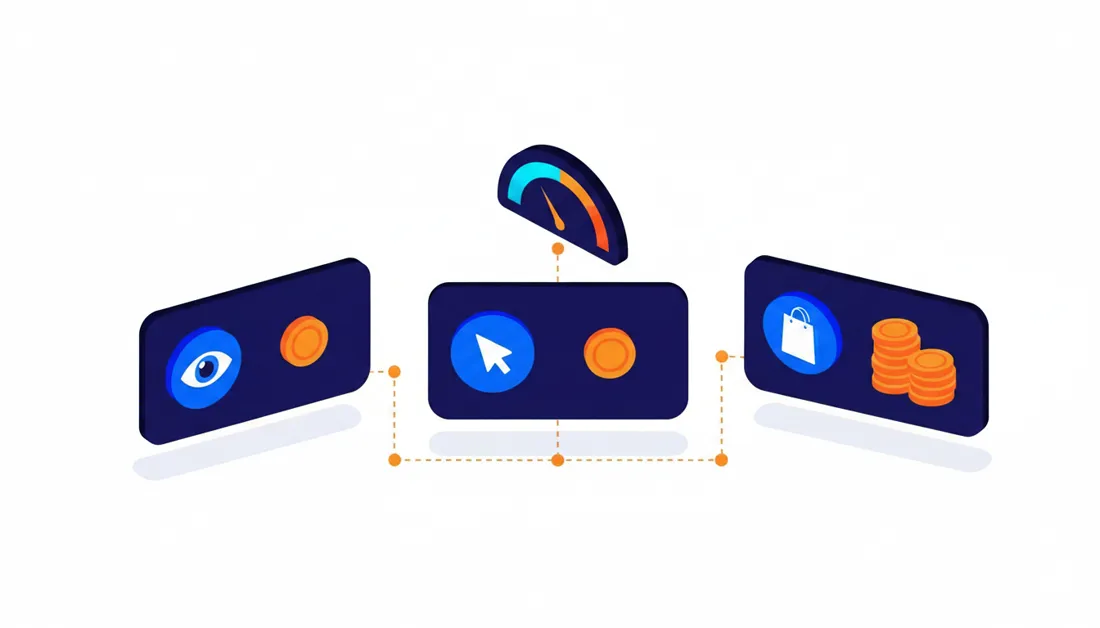
Why are the ranges so wide? Because the campaign objective fundamentally changes costs. Awareness and reach campaigns operate at noticeably lower CPM — Meta finds you the cheapest impressions for this objective. For purchase-optimized campaigns, the system targets users who are most likely to open their wallets — which means users that all advertisers are competing for — and the "rent" for this audience is naturally higher. The calendar also moves prices: during the November shopping season (11.11 and Black Friday weeks), the number of advertisers entering the auction increases, causing CPMs to exceed the annual average — a pattern that repeats every year.
Another important distinction: these figures represent only the media spend you pay to Meta. Agency fees for ad management, video and visual creative production, and any influencer partnerships are separate line items that vary by scope. At Alis Dijital, rather than selling fixed one-size-fits-all packages, we price based on the scope of the work; if you'd like to see a concrete framework tailored to your business, you can fill out our free analysis wizard in a few minutes.
5 Key Factors That Determine Cost
Why can the cost per sale for two businesses in the same industry differ by 3–4x? The answer lies in the combination of these five factors:
1. Target audience and competition
Narrow, "valuable" audiences are expensive. There is a significant CPM difference between targeting a broad audience across all of Turkey and targeting a narrowly defined audience in major cities by specific age and interests. CPM is higher for remarketing audiences — people who have already visited your site — but since this audience already knows you, the conversion rate is also higher, and the cost per sale is generally better than from cold audiences. So "high CPM = bad" is not always the right equation; the metric you should always look at is the cost per result.
2. Creative quality
This is your biggest cost lever. As shown in the example above, a video that doubles CTR halves the cost per click. In the campaigns we run for clients in 2026, the best performance typically comes from authentic, vertical videos with a strong first 3 seconds that feel like they were shot on a phone; polished, studio-quality corporate visuals produce more expensive results in most industries. Running a campaign with a single creative is like setting out with a single spare tire — always test with 3–5 variants.
3. Season and timing
The November shopping season, pre-holiday periods, Valentine's Day, Mother's Day, and back-to-school weeks are when the ad auction is most heated; the same audience costs more during these periods. The smart strategy is to run tests during the low season to find winning creatives and audiences, then enter the high season with this foundation and harvest results when they matter most.
4. Industry and product price
The cost per sale for a 500 TL accessory cannot — and should not — be the same as for a 50,000 TL furniture set. For high-ticket products, the customer's decision process is longer and CPA is naturally higher; what matters is not the absolute figure but the ratio of cost to product margin. This is also the surprise most businesses experience when switching from Trendyol or Hepsiburada to their own store: the customer acquisition cost that was buried inside marketplace commissions becomes visible as advertising cost on your own site.
5. Conversion funnel and site quality
The ad only brings the customer to the door; what they experience inside is determined by your website. Slow-loading pages, difficult mobile design, a complex checkout flow, and lack of trust signals (unclear return policy, absence of secure payment logos) all result in fewer sales from the same traffic, causing the cost per sale to inflate. To address this side, we recommend applying the tactics in our conversion rate optimization (CRO) guide; the cheapest "discount" you can earn without touching your ad budget is here.
A Sensible Starting Budget: Account for the Learning Period
When your campaign goes live, Meta's algorithm doesn't yet know who will make a purchase; in the early days it learns by testing different user profiles. During this "learning period," results are volatile and costs are typically higher than they will eventually be. Once the system has collected enough conversion signals per ad set — a conceptual target of around 50 results per week — it stabilizes and costs settle.
This is the biggest pitfall of small budgets: if your target cost per sale is 300 TL, a daily budget of 100 TL means the system can only collect data for one sale every three days. At this rate, the learning period never ends; the campaign stays in perpetual "crawling" mode. Our practical rule is therefore: the daily budget of a sales-focused ad set should be at least 1–2x the target cost per sale.
Converting this to a monthly figure: for a typical e-commerce product in Turkey, a monthly media budget of 10,000–30,000 TL for the first sales-focused campaign is a sensible starting band that gives the system enough room to learn and you enough data to make informed decisions. Starting with less is not impossible, but in that case the objective needs to scale down accordingly:
- Concentrate the budget into a single campaign and a single ad set — don't split it across three or five.
- Instead of optimizing for purchases, optimize for a more frequent event such as add-to-cart or traffic to build up pixel data.
- Don't constantly make changes to the campaign during the first 2–4 weeks; every major intervention resets the learning.
- Evaluate results in windows of at least 2–4 weeks, not daily; give each test 1–3 months in total.
If you're not sure how to build a campaign from scratch, our Instagram and Facebook advertising guide walks you through setting up your first campaign step by step; for the full picture on budget, targeting, and creative strategy, see our Meta Ads guide.
How to Set a ROAS Target: Know Your Break-Even Point First
ROAS (return on ad spend) is calculated by dividing the revenue generated from ads by the ad spend: if you spend 10,000 TL and generate 40,000 TL in revenue, your ROAS is 4. For the details and calculation nuances of the concept, see our what is ROAS article; here let's focus on the truly critical question: how much ROAS is enough for you?
The key is break-even ROAS: break-even ROAS = 1 ÷ profit margin. Let's build a concrete example. Say you sell a product for 1,000 TL: product cost 500 TL, shipping based on desi 80 TL, virtual POS (payment gateway) commission approximately 30 TL, packaging 20 TL; after netting out the effect of VAT and other costs, your gross profit is approximately 300 TL — meaning your margin is 30%. Break-even ROAS = 1 ÷ 0.30 ≈ 3.3. This means that any ROAS below 3.3 is losing money, while anything above that is profitable.
For a business that doesn't know its numbers, even a 5x ROAS can mean a loss; for a business that does know its numbers, a 2.5x ROAS can be a deliberate growth investment. What matters is not the number itself, but its relationship to your break-even point.
As for expectations over time: it's normal for ROAS to run below break-even in the first weeks of a new account; the system is learning and you're searching for winning creatives. The typical trajectory we see in the e-commerce accounts we manage is approaching break-even in the first 1–2 months, then gradually moving above it as winning creatives and audiences are identified. This is not a guarantee, but a realistic roadmap — approach anyone who promises "8x ROAS from the first week" with skepticism.
One final nuance: calculating the break-even only based on the first purchase can lead to unnecessary pessimism for products that are repurchased. If a customer places their second and third orders without any ad spend, breaking even on the first sale is profitable in the long run. We explored this perspective in depth in our customer loyalty and CLV article.
5 Levers to Improve Budget Efficiency
Reducing costs is usually not about cutting the budget — it's about getting more results from the same budget. Here are the five levers we've seen deliver the highest impact in the field:
- Creative rotation: Running the same creative for weeks creates "ad fatigue"; the audience starts ignoring it, frequency rises, and CPM increases. Keep costs in check by adding a new variant (new opening scene, new copy, new format) every two to three weeks.
- Signal quality: Set up the Conversions API (server-side tracking) alongside the Pixel and regularly check that purchase events are firing correctly. The algorithm can only find the right people if it's fed the right data; cross-validating with the GA4 side helps catch measurement errors early.
- Don't over-narrow your targeting: Stacking interest layers to create micro-audiences both raises CPM and ties the algorithm's hands. In 2026, broad targeting and Advantage+-style automated setups, when combined with strong creatives, produce cheaper results in most accounts; a strong creative will filter its own audience.
- Landing page experience: The page the ad leads to must load fast, work flawlessly on mobile, and deliver on the same promise as the ad. For visitors who reach the cart but drop off, deploy cart abandonment reduction methods; this is the quietest drain on your ad budget.
- Remarketing layer: Allocate a portion of your budget to audiences who have visited your site, added to cart, but not yet purchased; this layer is typically the most efficient spend in an account. Converting visitors into a GDPR-compliant, permission-based email list also creates a wholly owned channel that reduces ad costs over the long term.
If you've activated all five levers and ads are running but sales aren't coming, the problem is usually more fundamental. We examined the eight most common mistakes we encounter — and their solutions — in our why Meta Ads aren't driving sales article.
Sample Scenarios: What to Expect with a Small or Mid-Sized Budget?
Let's connect the theory to two concrete scenarios. The table below is not a commitment but a planning framework; figures vary by industry, product margin, and creative quality.
| Scenario | Monthly media budget | Recommended setup | Realistic target for the first 3 months |
|---|---|---|---|
| Small budget | ≈ 10,000 – 20,000 TL | Single sales campaign, broad targeting, 3–4 creative variants | Accumulate data, find winning creative, break-even ROAS |
| Mid-sized budget | ≈ 30,000 – 75,000 TL | Cold audience + remarketing layer, regular creative testing, catalog ads | Move above break-even and scale proven winners |
In the small-budget scenario, the primary output of the first month is not sales — it's information: which creative gets clicked, which product generates interest, where the site loses people. Getting to around break-even in the second and third months, armed with this information, is a successful start. The most expensive mistake during this period is shutting the campaign down because "I'm not making money" and starting from scratch the next month; every restart makes you pay the learning cost all over again.
In the mid-sized budget scenario, you have the luxury of building structure: alongside campaigns targeting cold audiences, you can add a remarketing layer, catalog ads for e-commerce, and a regular creative testing discipline. At this scale, the daily monitoring, test discipline, and reporting the work requires are significant time investments; most businesses whose budgets reach this level find that delegating management to professional Meta Ads management pays for itself — because the improvement in efficiency from experienced management typically more than covers the management fee.
Conclusion: The Budget That Wins Is Built on Systems, Not Size
To wrap up: the honest answer to "what does Instagram advertising cost?" is not a price tag — it's an equation:
- There is no fixed price; costs form in the auction based on your audience, your creative, and the season.
- In Turkey in 2026, wide bands apply: from tens of liras to a few hundred liras for CPM, and from a few liras to the mid-twenties for CPC; only your own data will reveal your actual reality.
- For sales-focused campaigns, allocate a budget that can feed the learning period; don't let your daily budget fall below your target cost per sale.
- Derive your ROAS target from your own break-even point, not from trendy benchmarks.
- The most powerful levers for reducing costs lie in your creative and your website — not in the platform.
Building this system takes time and experience — and every trial-and-error has a real monetary cost. At Alis Dijital, we build and run the complete system described in this article for your business — from budget planning and creative production to measurement setup and weekly optimization in Meta Ads management. If you want to clarify where your ad budget is going and get more sales from the same money, take a look at our Meta Ads (Facebook & Instagram) service; let's review your current account together and find where the money is leaking.