While advertising costs in e-commerce rise every year, the most valuable asset you own is often overlooked: your own email list. Social media algorithms change, ad unit prices climb, marketplace commissions erode your profit — but your permission-based email list belongs entirely to you, and no one can take it away. That's why email marketing, when built correctly, remains one of the highest-return channels available.
In this guide we approach email marketing from the ground up for SMEs selling in Turkey through ikas, Shopify, or marketplaces — covering everything from building a permission-based list to automation sequences, segmentation, deliverability, and compliance. The goal isn't polished theory; it's building a revenue-generating system you can put into practice today.
Why is email still the highest-ROI channel?
Every year, the marketing world produces a new "trending channel" — but email has been quietly doing its job for decades. There are a few non-technical but very practical reasons for this. Email gives you an owned channel: unlike your social media followers, you don't pay rent to an intermediary to reach your subscribers.
According to broadly accepted industry ranges, email marketing generates one of the highest return rates per TL spent. Read this figure not as a magic number but as a trend: because it's low-cost, scalable, and largely automatable, its return per unit is high.
- Low marginal cost: Whether your list has 500 people or 50,000, the cost per send stays negligible.
- High-intent audience: Someone who gave you their email already knows you — they're far warmer than cold ad traffic.
- Automation-friendly: A sequence you build once recovers carts, brings in first orders, and wins back customers even while you sleep.
- Measurable: Opens, clicks, conversions — you see every step clearly and keep improving.
An important caveat: email generates high ROI because, when built correctly, it builds relationships. Buy a list, send without permission, or blast everyone with the same mass email — and this advantage evaporates quickly. The foundation of the system rests on permission and value from start to finish.
Building a permission-based list: start with a lead magnet
The most critical and most neglected step in email marketing is growing your list with the right people and with their permission. Buying a list or sending to randomly collected addresses means both legal risk and reputational damage. Instead, give people a reason to voluntarily leave you their email.
What is a lead magnet?
A lead magnet is a small but real piece of value that a visitor receives in exchange for their email address. In e-commerce, the lead magnet that converts most reliably is almost always a discount coupon exclusive to the first order. The message "Leave your email for 10% off your first purchase," shown at the right moment, can convert a meaningful share of visitors landing on your site into subscribers.
- Welcome coupon: A discount or free shipping for new visitors on their first order.
- Stock/price alert: A "notify me when the price drops" form for out-of-stock or expensive products.
- Useful content: Sector-specific mini-guides like a care guide, size chart, or how-to manual.
- Giveaway / early access: Subscriber-only priority access to a new collection or campaign.
Multiply your collection touchpoints
Don't settle for a single form. Set up multiple contact points across your site: a timed pop-up on the homepage, a stock alert on the product page, a "stay informed about campaigns" checkbox at checkout, and a newsletter sign-up at the bottom of blog posts. The golden rule here is that the checkbox must not be pre-ticked; the user must grant permission consciously.
Automation sequences: the system that sells while you sleep
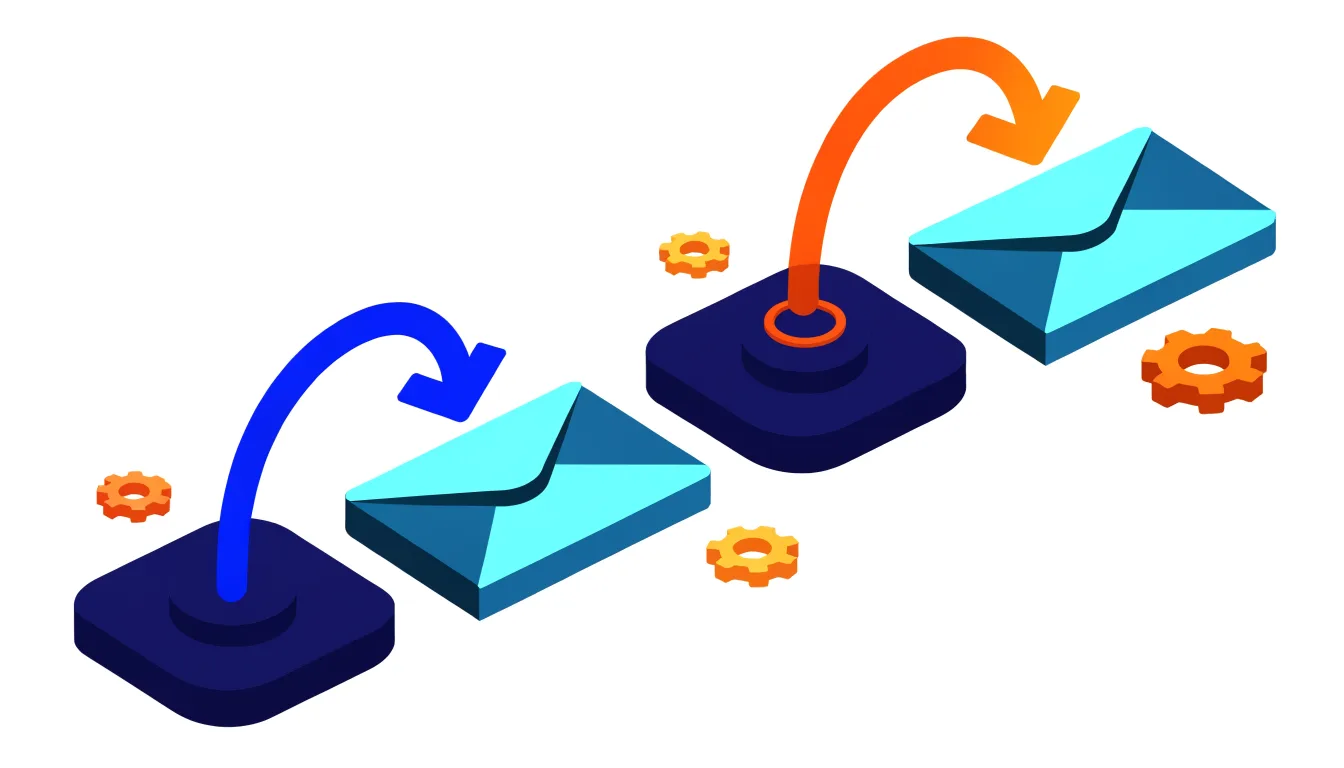
Bulk campaign emails (newsletters) are the visible face of email marketing — but the part that quietly generates the real revenue is automation sequences. These are pre-written email series that send automatically in response to a trigger (sign-up, cart abandonment, order, inactivity). You build them once, and they run for months.
1. Welcome sequence
The moment someone joins your list is the moment they're most interested in you. Don't waste this opportunity on a single "you've subscribed" email. A good welcome sequence typically consists of 2–4 emails:
- Immediately: Welcome + deliver the coupon you promised clearly. The coupon code should be visible and usable in one click.
- 1–2 days later: Your brand story, your best-selling products, and why they should choose you. Add social proof (reviews).
- 3–4 days later: Coupon reminder + urgency ("your coupon is expiring soon"). This prompts those who haven't shopped yet to take action.
The welcome sequence typically has the highest open and click rates of any sequence in most stores, because the audience's interest is fresh. Leaving a professional first impression with a polished sequence lifts the performance of all your subsequent sends.
2. Abandoned cart recovery sequence
In e-commerce, the most money is lost not at checkout but right before it. A large proportion of visitors add products to their cart but leave without buying. This is exactly what the cart recovery sequence is for — to win back that lost revenue — and it's often the single highest-return automation.
For the reasons behind cart abandonment (shipping cost shock, forced account creation, indecision) and ways to reduce it, our how to reduce cart abandonment in e-commerce article is a good starting point. A working recovery sequence on the email side typically looks like this:
- Email 1 (1 hour later): A gentle reminder — "Looks like you left something in your cart." Product image + a one-click return-to-cart link.
- Email 2 (24 hours later): Trust signals — free shipping threshold, easy returns, secure checkout, customer reviews.
- Email 3 (48–72 hours later): A final nudge — a small incentive (e.g. a small discount or free shipping) and light urgency.
Don't always include a discount in the third email; most customers return on the reminder alone, and an unnecessary discount eats into your margin. It's more profitable to save the discount only for the segment that still hasn't converted.
3. Post-purchase and cross-sell
The sale doesn't end when the order comes in — that's where it begins. The post-purchase sequence both strengthens the customer experience and sows the seeds of the next sale:
- Order confirmation and shipping notifications: These are transactional emails with the highest open rates; a golden opportunity to showcase your brand.
- Post-delivery review request: Builds your product reviews and accumulates social proof.
- Cross-sell: Recommend complementary products that go with what was purchased. A phone case for someone who bought a phone; a care product for someone who bought shoes.
- Reorder reminder: For consumable products (cosmetics, dietary supplements, coffee), a "time to restock" email sent when the product is running low does great work.
Growing repeat purchases and customer lifetime value (CLV) is the real engine of profitability in e-commerce. Check out our customer loyalty and repeat purchasing (CLV) guide to go deeper on this topic.
4. Win-back sequence
Every list gradually accumulates "sleeping" subscribers over time: people who haven't opened, clicked, or shopped in a while. Before you lose them completely, try waking them up with a win-back sequence. A series in the tone of "We miss you," a special offer, or "Do you still want to hear from us?" brings some of them back.
The hidden benefit of a win-back sequence is this: by removing (or suppressing) non-responders after a set period, you preserve your list health and sending reputation. Continuing to send to dead addresses drags down your open rates and puts all your sends at risk.
Segmentation: stop sending everyone the same email
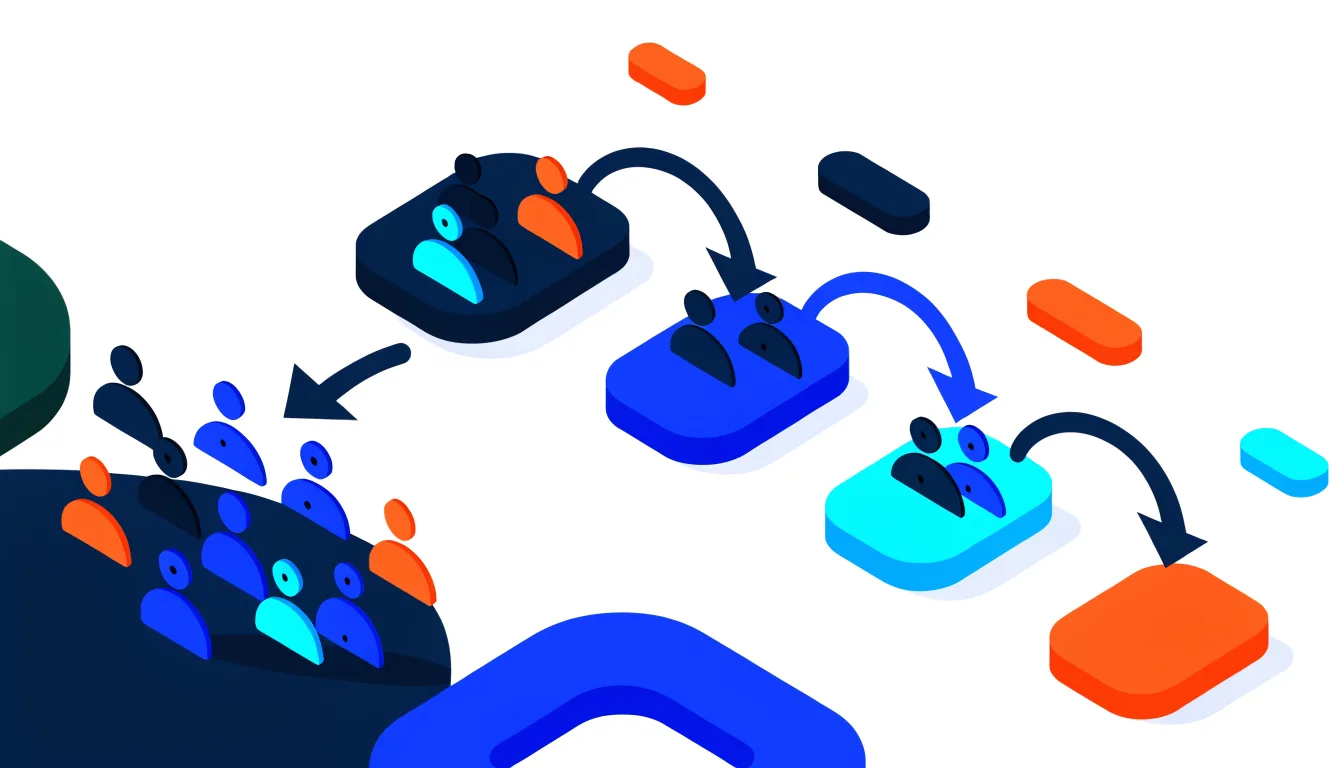
The era of one-size-fits-all mass sending is over. Blasting the same message to 10,000 people at once leaves most of them disengaged and increases unsubscribes. Segmentation is dividing your list into meaningful groups and sending each group the right message — and its impact on performance is significant.
Which segments to start with?
- New subscribers vs. customers: Speak differently to someone who hasn't bought yet, and differently to a loyal customer.
- Purchase frequency: One-time buyers, repeat buyers, and VIP customers.
- Last engagement date: Active, cooling-off, and dormant subscribers.
- Interest/category: Which category they've bought from or which products they've browsed.
- Cart/checkout behavior: Cart abandoners, coupon users, high-value basket sizes.
You don't need complex rules to start. Even just separating "customers" from "those who haven't bought yet" noticeably improves the relevance of your sends.
Personalization: beyond first names
Personalization is not just saying "Hello John." True personalization is adapting the content to the individual's behavior: a product recommendation based on the category they browsed, a complementary suggestion based on their last purchase, or a delivery timeline based on their city. Relevant content drives far more conversions than adding a first name.
A caveat: use the data you collect for personalization (purchase history, behavior) only in ways that add value to the customer, and only transparently. Messages that go too far — giving off a "you know everything about me" vibe — can backfire.
A/B testing and continuous improvement
The strongest aspect of email marketing is that it's measurable — but if you don't test and improve what you measure, that strength goes to waste. A/B testing is trying two different versions of the same send to a small audience and sending the winning version to the rest.
What to test?
- Subject line: The single biggest factor affecting open rates. Short vs. long, with emoji vs. plain, question vs. statement.
- Send time and day: Rather than assuming when your audience is active, test it; evenings and weekday lunchtimes tend to perform well for most Turkish lists, but this varies from store to store.
- Preview text (preheader): The second line that appears next to the subject line; it noticeably influences opens.
- CTA button: Text, color, and placement.
- Sender name: Brand name vs. a personal tone like "Ayse from Brand."
Test only one variable at a time; otherwise you can't tell which change influenced the result. And use a large enough audience to see a statistically meaningful difference — you can't draw firm conclusions from a test of 50 people.
Deliverability: reaching the inbox without going to spam
Even if you write the best email in the world, it has zero value if it doesn't reach the inbox. Deliverability — the likelihood of your emails landing in the inbox rather than the spam folder — is largely determined by your technical infrastructure and sending habits.
Technical foundations
- Send from your own domain: Send from an address that belongs to your brand (e.g. info@yourbrand.com) rather than a free email service. Our what is a business email and how to get one article will help you build your sender reputation.
- SPF, DKIM, and DMARC records: These three DNS records prove that your sends are not forged. Without them, mail providers view you with suspicion. This setup is done once and can dramatically change your delivery rate.
- Warm up your sender reputation: Don't send 50,000 emails at once from a new domain; increase volume gradually.
Content and list hygiene
- Keep a clean list: Regularly clean out bounced and never-opened addresses. A bad list destroys your reputation.
- Avoid spam triggers: Excessive caps, "FREE!!!", exaggerated exclamation marks, and emails consisting of nothing but one large image are risky. Maintain a text-to-image balance.
- Offer easy unsubscribes: Hiding the unsubscribe link is both illegal and increases spam complaints. A visible "unsubscribe" link actually protects your reputation.
- Send based on engagement: Reduce send frequency to non-openers; focus on the most active subscribers.
KPIs: what to measure and how to interpret it
You can't improve what you can't measure. The core metrics to track in email marketing, and the generally healthy ranges (which vary by industry and list), are:
- Open rate: The percentage who opened the email. A rate in the 15–30% range is common for most e-commerce lists. Reflects your subject line and sender reputation.
- Click-through rate (CTR): Those who clicked a link inside. Indicates how relevant your content and offer are.
- Conversion rate: Those who clicked and then purchased. This is the real revenue metric; if opens are high but conversion is low, the problem lies in the offer or the landing page.
- Unsubscribes and spam complaints: If rising, you're either sending too frequently or sending irrelevant content.
- Revenue per recipient: How much TL each send generates per subscriber — the most honest way to compare campaigns.
To combine these metrics with on-site behavior, you need solid measurement setup. Tag your email traffic with UTM parameters and track end-to-end conversions using the Google Analytics guide for e-commerce. When opens and clicks are good but sales are low, the real improvement area is usually your site; our conversion rate optimization (CRO) guide is a complementary resource for that.
Compliance: permission and legal requirements
Sending commercial electronic messages in Turkey is subject to explicit consent. This is not just a legal requirement — it's also good marketing practice: a permission-based list generates higher open rates and fewer complaints. The basic rules:
- Obtain consent in advance: Explicit consent is required to send commercial emails. Checkboxes must not be pre-ticked.
- IYS (Ileti Yonetim Sistemi — Message Management System): Commercial electronic messages require consents and opt-out requests to be registered with the IYS; configure your process accordingly.
- Easy opt-out right: Provide a free and easy "unsubscribe / opt out" option in every message and apply the request without delay.
- Transparent data use: Clearly state what data you collect and why in your disclosure text.
- Data security: Store the addresses and behavioral data you collect securely.
Working on a permission-based basis may seem to grow your list more slowly in the short term — but in the long run it protects you from legal risk and lets you build a far more profitable channel with an audience that is genuinely interested.
Integration with SMS and WhatsApp
Email is powerful — but it delivers its best results not alone but as part of a multi-channel setup. SMS and WhatsApp complement email's strengths; their open rates are very high and they're ideal for messages that demand immediate attention.
- SMS: For short, time-sensitive messages — shipping notifications, last-hour campaigns, the final step of cart recovery. Use selectively since costs are higher.
- WhatsApp: For more personal and interactive communication — order updates, Q&A, image-rich product recommendations. Our how to create a WhatsApp link article is a practical starting point for making it easy for customers to contact you with a single tap.
- Email: The best channel for detailed content, storytelling, education, and catalog introductions.
The right setup is to use the channels to support each other, not to repeat the same message. For example, in cart recovery the first reminder could be an email; if it doesn't convert, the second touchpoint could be WhatsApp. Remember to obtain separate consent for each channel and to offer an easy opt-out on each one.
Where to start: a practical roadmap
Rather than trying to build this entire system all at once, start with the highest-return steps. For most SMEs in Turkey, the sequence should be:
- Permission collection: Set up a sign-up form/pop-up with a welcome coupon and ensure IYS compliance.
- Welcome sequence: Activate the automated 2–3 email series.
- Cart recovery: The highest-return automation; set up the 3-step sequence.
- Delivery infrastructure: Complete your own domain + SPF/DKIM/DMARC records.
- Segmentation and measurement: At minimum, separate customers from subscribers and track conversions with UTM parameters.
- Win-back and multi-channel: Once the system is established, add the win-back sequence and SMS/WhatsApp integration.
These six steps, in most stores, visibly raise email's share of total revenue — and once built, the system largely runs on its own.
Conclusion
Those who say email marketing is "dead" are generally those who never built it properly. When a permission-based list, well-designed automation sequences, smart segmentation, and solid delivery infrastructure come together, email becomes an ad-independent, scalable, high-return revenue engine for your e-commerce business. And it's built on an asset you own — one that no one can take away from you.
If you'd like to clarify your business's email and automation potential, let's assess your situation together. To see your store's current funnel and the revenue you may be leaving on the table, you can request a free e-commerce analysis or reach us directly via our contact page. A properly configured email system is one of the fastest-returning investments for most stores.